




The global digital health market will reach 657.5 billion USD in 2025, radically transforming daily clinical practice. Healthcare professionals waste up to 16 hours a week on administrative paperwork, time that could be spent with their patients. Digital clinical efficiency promises to reverse this situation through intelligent technologies that automate repetitive tasks, improve document accuracy and free up valuable time for direct care.
Table of Contents
- Definition and scope of digital clinical efficiency
- Impact on the reduction of administrative burden
- Key technologies for digital clinical efficiency
- Impact of digital clinical efficiency on quality and safety.
- Case studies and real applications
- Demystifying misconceptions about digital clinical efficiency
- Implementation challenges and solutions
- Comparison between traditional and digital systems
- Optimize your practice with digital solutions from Itaca
- Frequently asked questions about digital clinical efficiency
Key Points
| Point | Details |
|---|---|
| Definition of digital clinical efficiency | Integration of digital technologies to optimize clinical processes and reduce administrative burden |
| Proven time reduction | Up to 30% less time spent on administrative tasks with automated digital systems |
| Key enabling technologies | AI for transcription, note automation, interoperability and structured access to clinical data |
| Impact on quality and safety | 25% reduction in medical errors and better care coordination through complete data |
| Keys to successful implementation | Continuous training, change management and strong guarantees of privacy and professional control |
Definition and Scope of Digital Clinical Efficiency
Digital clinical efficiency represents the strategic integration of digital technologies to optimize clinical and administrative processes in modern healthcare practice. This approach transforms the way professionals manage information, document consultations and coordinate care. Digital transformation in healthcare optimizes processes and improves the quality of care thanks to technologies that directly impact the global digital health market.
The relevance of this concept is reflected in the strong projected growth of the digital healthcare market. Healthcare professionals experience tangible benefits: less time in front of administrative screens, greater accuracy in clinical records and more ability to focus on complex diagnostic decisions. Patients receive more personalized and coordinated care.
The main areas impacted by digital clinical efficiency include:
- Automated clinical documentation through intelligent transcription of face-to-face consultations and telemedicine
- Structured generation of SOAP notes, summaries and medical certificates with minimal manual intervention
- Quick access to relevant clinical information through intelligent search of complete records
- Improved coordination between specialties thanks to structured and interoperable data
- Significant reduction of errors associated with incomplete or illegible documentation
- Clear traceability of clinical decisions supported by cited evidence
This transformation does not imply changing the way you practice medicine. Digital tools adapt to your existing workflows, enhancing your expertise without imposing rigid protocols or altering your professional autonomy.
Impact on Administrative Burden Reduction
The digitization reduces the time spent on administrative tasks by up to 30% and minimizes errors and duplication in daily clinical documentation. This tangible benefit translates into hours recovered weekly, allowing healthcare professionals to focus on what really matters: diagnosing, treating and accompanying their patients.
The automation of repetitive tasks represents the most visible change. Transcribing inquiries, generating structured notes, completing certificates and answering administrative queries consume mental energy and time that can now be optimized through intelligent systems. Digital technology eliminates redundant manual steps without compromising document quality.
To maximize this benefit, consider these essential steps:
- Identify the administrative tasks that currently consume the most time in your daily practice.
- Evaluate digital tools that specifically automate these tasks without requiring drastic changes to your workflow.
- Prioritize solutions that offer integration with your existing systems to avoid duplicate data entry.
- Implement gradually, starting with one or two key functionalities before expanding
- Measure time saved weekly to justify investment and adjust adoption
Minimizing document errors represents another crucial benefit. Digital systems reduce inconsistencies, improve legibility and ensure that critical information is not lost between shift transitions or referrals. Complete and accurate documentation also strengthens medicolegal defense and facilitates audits.
Professional advice: When selecting tools for generate medical documents with AI, Prioritize those that allow for human review and adjustment before finalizing any notes. Professional control over the final content ensures clinical accuracy and keeps your ethical responsibility intact.
Key Technologies for Digital Clinical Efficiency
Artificial intelligence forms the cornerstone of modern digital clinical efficiency. The AI automates transcription and generates clinical notes with high accuracy, improving efficiency and traceability in everyday healthcare processes. This technology transforms natural conversations between doctor and patient into structured documentation, capturing details that could be lost in the fast pace of the consultation.
Interoperable systems facilitate the access and use of structured data between different platforms and specialties. Information flows without technical barriers, allowing each professional to access the complete context of the patient at the precise moment of decision making. This connectivity reduces redundancies and strengthens care coordination.
Current digital technologies support both face-to-face consultations and telemedicine, adapting to the specific clinical context:
- Real-time automatic transcription during physical consultations without interrupting patient-physician interaction
- Capture of information in video consultations with instant generation of structured summaries.
- Response to clinical queries with sources cited to validate differential diagnoses or treatments
- In-depth research synthesis of complex cases through analysis of reliable medical references
- Automatic integration of clinical records to enrich the context without manual entry
Ethics and human control remain central to the appropriate use of these technologies. The AI does not replace the physician, It enhances their work by improving accuracy and focus in the clinical consultation. The professional always keeps the last word on diagnoses, treatments and final document content.
Professional advice: Look for platforms that clearly state the sources of their clinical recommendations through cited references. Transparency in AI reasoning allows you to validate suggestions quickly and maintain your clinical judgment as the final authority on every decision.
Impact of Digital Clinical Efficiency on Quality and Safety
The access to structured data reduces medical errors associated with incomplete records in a 25%, significantly improving patient safety. Complete, legible and organized information enables better informed clinical decisions, especially in emergency situations where every second counts and complete context makes a difference.

Improved clinical coordination represents another tangible benefit for quality of care. When different specialists have access to the same structured information, referrals are more accurate, treatments are better coordinated and dangerous drug interactions are avoided. Traceability of clinical decisions strengthens long-term continuity of care.
Key elements driving these improvements include:
- Complete and updated medical records in real time, accessible from any point of care.
- Automatic alerts on allergies, drug interactions or contraindications based on patient data
- Standardized documentation that facilitates understanding among professionals from different specialties
- Automatic recording of clinical decisions with rationale and sources of supporting evidence
- Reduction of critical omissions through intelligent templates that prompt for essential information
Quick and accurate access to key information during care transforms the clinical experience. Manually searching through lengthy records consumes precious minutes. Intelligent digital systems extract relevant data instantly, presenting just what is needed for immediate decision making without information overload.
The contribution to superior clinical outcomes is reflected in measurable indicators: fewer hospital readmissions, better therapeutic adherence and greater patient satisfaction with their care. Patient confidence increases when they perceive that their physician has full access to their history and makes informed decisions.
Designing systems that prioritize security and clinical usability makes the difference between successful adoption and rejection. Tools must be intuitive, fast and respect the practitioner's natural workflows. Poorly designed technology can paradoxically increase risks by generating frustration or dangerous shortcuts.
Case Studies and Real Applications
The digital implementations increase staff satisfaction at 15% and improve clinical outcomes through reduced administrative burden and better access to information. These data reflect real-world experiences of professionals who have adopted digital clinical efficiency in a variety of care settings, from private practices to large teaching hospitals.
Freeing up time for direct care transforms the quality of consultations. Physicians report deeper conversations with patients, greater ability to explain complex diagnoses and reduced stress associated with pending documentation. The time regained also allows for continuous professional updating and improved work-life balance.
Concrete examples of successful implementation include:
- Primary care clinics that reduced post-consultation documentation time from 3 hours to 45 minutes daily
- Emergency departments improving referral accuracy through automated structured notes
- Specialists who optimize medical administrative tasks recovering 8 hours per week for complex cases
- Telemedicine equipment that generates clearer patient summaries aligned with each query
- Residents taking advantage of improvements for patient consultations during their clinical training
Clinical indicators also reflect measurable improvements. Hospitals report reduced waiting times, improved adherence to evidence-based protocols and increased satisfaction in patient experience surveys. Well-implemented technology simultaneously benefits professionals and patients.
The importance of training and ongoing support cannot be underestimated. Institutions that invest in adequate training and technical support during adoption achieve better results than those that simply install software and expect immediate results. Cultural change requires time, patience and committed leadership.
Demystifying Misconceptions about Digital Clinical Efficiency
The 95% of professionals consider that digitization supports and does not replace their clinical work, contradicting the common fear that technology will displace the physician. This positive perception reflects real experiences with well-designed tools that enhance human capabilities rather than trying to replace them.
Technology adoption may initially increase the perceived burden during the adaptation period. Learning new systems, adjusting workflows and developing confidence in the technology requires investment of time and mental energy. This initial temporary cost generates understandable resistance, but disappears once the learning curve is overcome.
Common misconceptions about digitization in healthcare include:
- Believing that AI will make clinical decisions autonomously without professional medical supervision
- Assuming that digital systems will completely eliminate all human or technical error
- Thinking that the technology works perfectly from day one without continuous adjustments or enhancements
- Fear that digitalization will depersonalize the patient-physician relationship or reduce empathy.
- Assuming that adopting digital efficiency requires abandoning traditional methods that work well
Reality shows that technology complements clinical judgment without replacing it. Systems provide structured information, suggest differential diagnoses supported by evidence and automate documentation, but the professional always evaluates, questions and decides according to his or her expert judgment and knowledge of the specific patient.
The importance of professional control and ethical support in AI makes the difference between useful tools and problematic systems. Responsible platforms expose their sources, allow human review before finalizing documents, and respect patient privacy through design that prioritizes security from the fundamental technical architecture.
The need for training and change management for lasting success represents an investment, not an expense. Institutions that adequately train their staff, listen to concerns and adjust implementations according to real feedback achieve sustainable adoption and demonstrable medium-term benefits.
Implementation Challenges and Solutions
The 40% of institutions faces organizational resistance and 35% report lack of technological training as the main obstacles to implementing digital clinical efficiency. These data reflect real administrative management challenges that must be addressed strategically to ensure successful and sustainable adoption.
Resistance to change arises naturally when routines established over years or decades are altered. Experienced professionals may perceive technology as a threat to their autonomy or a questioning of their proven methods. This resistance diminishes when staff is involved from the design of the implementation, respecting their experience and adjusting the technology to their real needs.
The technology gap and insufficient training represent technical barriers that can be overcome. Many healthcare professionals did not receive digital training during their university studies. Providing hands-on training, accessible technical support and protected time for learning facilitates the transition and builds confidence in the new tools.
Concerns about privacy in digital health are legitimate and require sound technical and legal responses. Systems must comply with strict regulations, implement robust encryption and ensure that clinical data remain under the exclusive control of the professional and the institution, never shared with third parties without explicit consent.
Practical solutions to overcome these challenges include:
- Gradual implementation starting with enthusiastic volunteer teams that serve as positive role models
- Continuous training tailored to different levels of digital competence with personalized follow-up
- Transparent communication on expected benefits, technical constraints and realistic adaptation times
- Verifiable technical assurances on security, privacy and compliance with independent audits
- Change management with visible leadership, bi-directional feedback and adjustments based on actual user experience
| Main Challenge | Solution Strategy |
|---|---|
| Cultural resistance to change | Engage professionals in design, gradual implementation with volunteers |
| Digital skills gap | Ongoing hands-on training with accessible technical support |
| Privacy concerns | Verifiable technical warranties, strict regulatory compliance |
| Initial investment cost | Demonstrate ROI through time saved and improvements in clinical metrics |
| Integration with legacy systems | Prioritizing interoperability, open APIs and international standards |
For a deeper dive into implementation strategies and best practices, explore the articles on digital clinical efficiency that address specific cases and lessons learned from real experiences in various healthcare contexts.
Comparison between Traditional and Digital Systems
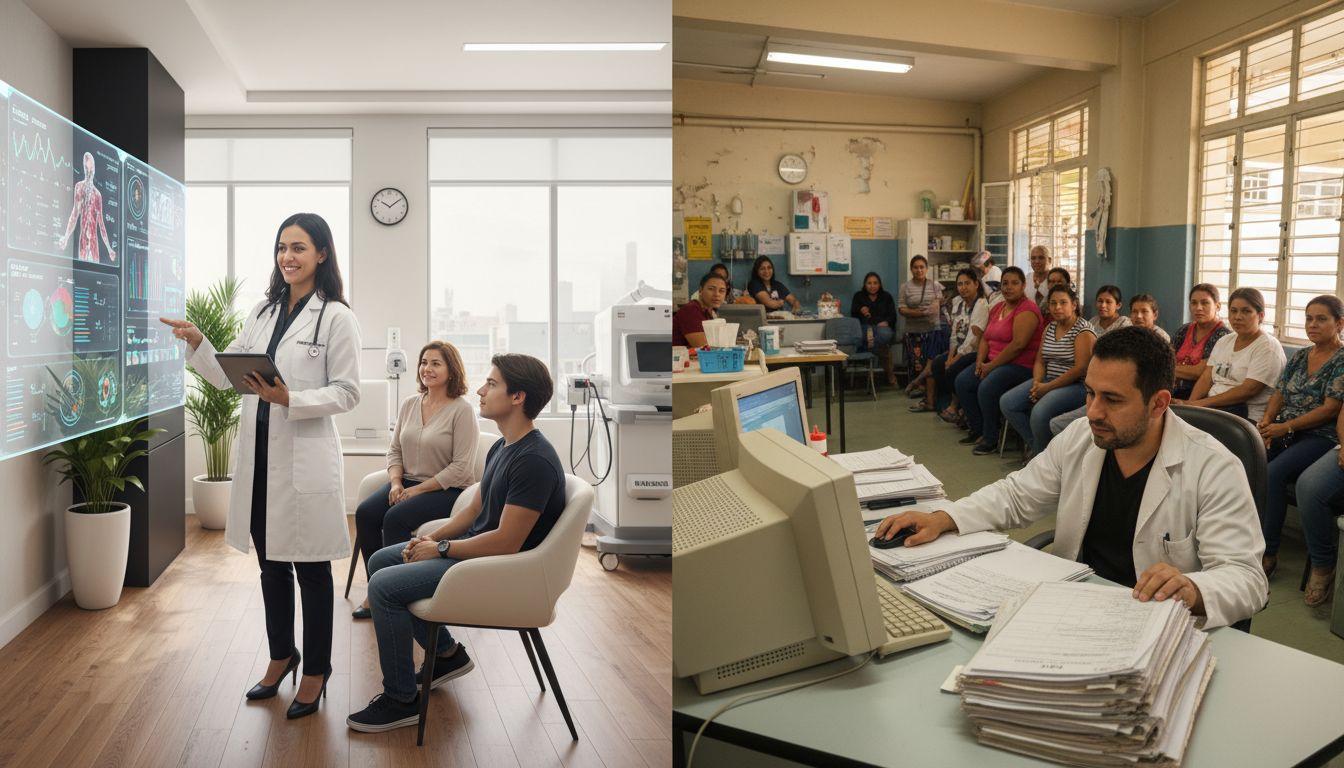
The digital systems reduce errors and time approximately 25% over traditional manual methods, representing a significant competitive advantage for institutions and professionals who prioritize quality and efficiency simultaneously.

The key differences between traditional manual documentation and automated digital systems are evident in objective metrics. Time spent completing post-consultation notes decreases dramatically. The rate of errors of omission or illegibility virtually disappears. The ability to retrieve specific historical information improves exponentially.
| Comparative Aspect | Traditional Systems | Digital Systems with AI |
|---|---|---|
| Average documentation time per consultation | 12 to 15 minutes manual writing | 3 to 5 minutes review and adjustment |
| Documentary error rate | 8 to 12% for omissions and illegibility | 2 to 3% mainly clinical settings |
| Access to specific historical data | 5 to 10 minutes manual search | 10 to 30 seconds intelligent search |
| Traceability of clinical decisions | Limited, depends on manual detail | Complete with automatically cited sources |
| Reported professional satisfaction | Moderate, frustration due to administrative burden | Discharge, release of time for direct care |
| Coordination between specialties | Slow, requires active communication | Fast through structured data sharing |
Improved traceability represents an often underestimated strategic advantage. Digital systems automatically record the reasoning behind clinical decisions, the sources consulted and the evolution of diagnostic thinking. This documentation strengthens medicolegal defense and facilitates quality audits.
The increase in satisfaction affects both professionals and patients. Physicians experience less burnout related to administrative tasks. Patients perceive more personalized attention when their physician can focus entirely on the conversation rather than frantically writing notes.
Strategic advantages of systems with AI and automation include:
- Scalability without a proportional increase in administrative burden or support personnel
- Continuous improvement through pattern learning and updating of models with new evidence
- Consistency in document quality independent of professional's fatigue or workload
- Analytical ability to identify population trends and opportunities for systemic improvement
For professionals who seek to optimize their daily practice, the digital tools for specialists offer specific functionalities adapted to the particular needs of different clinical areas, maximizing relevance and immediate practical utility.
Optimize your practice with digital solutions from Itaca
After exploring the proven benefits of digital clinical efficiency, the next natural step is to implement tools designed specifically for healthcare professionals who value their time and the quality of their documentation. Itaca offers practical solutions that automate high-burden tasks without disrupting the way you practice medicine.

The platform transcribes face-to-face and telemedicine consultations, generates structured notes and answers clinical queries with cited sources. Maintain full control over your documentation while freeing up weekly hours to focus on what really matters: your patients. Discover how to optimize medical administrative tasks through concrete steps that can be applied today.
Digital tools for specialists are tailored to different clinical settings, from primary care to complex subspecialties. Explore Itaca's clinical efficiency blog for case studies, detailed guidelines and best practices backed by real-world experiences from professionals like you.
Frequently Asked Questions about Digital Clinical Efficiency
How do I start implementing digital clinical efficiency in my practice?
Start by identifying the administrative tasks that currently consume the most time. Evaluate a specific tool to automate that particular task, implement incrementally on a subset of patients, and measure the time saved before expanding. Incremental adoption reduces resistance and allows for adjustments based on actual experience.
Can artificial intelligence replace physician decision making?
No. AI provides structured information, suggests differential diagnoses with cited sources and automates documentation, but the professional always maintains the final responsibility for clinical decisions. The technology empowers medical judgment without replacing it, functioning as an intelligent assistant under constant professional supervision.
What measures are taken to protect the privacy of clinical data?
Responsible systems implement end-to-end encryption, comply with strict regulations such as GDPR and ensure that data remains under the sole control of the professional and the institution. Look for platforms with verifiable independent audits and transparent policies that never share information with third parties without explicit consent.
How long does it take to notice an improvement after implementing digital systems?
Practitioners report noticeable improvements in 2 to 4 weeks once the initial learning curve is overcome. The first month may feel slower as you adapt to new flows. From the second month on, the time saved becomes evident and cumulative, with maximum benefits generally achieved after 3 months of consistent use.
What training does the team require to take advantage of these technologies?
Initial hands-on training of 2 to 4 hours is sufficient for basic functionalities. Accessible technical support during the first weeks facilitates the resolution of specific doubts. Well-designed platforms prioritize intuitive interfaces that minimize the learning curve, allowing professionals with basic digital skills to use them effectively from the start.



Leave a Reply