




Recording clinical information in Latin American hospitals often consumes up to 40% of mental health professionals' time. This administrative burden not only delays care but also affects the quality of the bond with each patient. A structured approach and the intelligent use of digital solutions can transform the clinical interview into a more effective, secure, and patient-centered experience.
Index
- Step 1: Prepare the environment and gather relevant information
- Step 2: Establish a therapeutic relationship and define goals
- Step 3: Develop key questions for the initial assessment
- Step 4: Register and structure clinical data using digital solutions
- Step 5: Verify the quality and consistency of the generated documentation
Quick Summary
| Key Point | Explanation |
|---|---|
| 1. Create a safe environment | Ensure the space is private and quiet to foster patient trust. |
| 2. Establish a trusting relationship | Use active listening and empathy to make the patient feel comfortable sharing sensitive information. |
| 3. Design effective questions | Combine open-ended and closed-ended questions to obtain a comprehensive and meaningful assessment of the patient's situation. |
| 4. Digitize clinical records | Use a secure digital system that facilitates the storage and tracking of patient information. |
| 5. Verify documentation consistency | Meticulously review the records to correct inconsistencies and ensure the accuracy of the recorded information. |
Step 1: Prepare the environment and gather relevant information
The preparation of the environment is fundamental for establishing an effective and comfortable clinical interview that allows for fluid and secure communication. The main objective at this stage is to generate a space that invites trust and facilitates the collection of sensitive information about the patient's mental health.
To achieve a suitable environment, you need to create a space that ensures privacy and tranquility. Set up a consultation or room that ensures confidentiality, choosing a place free from interruptions or external noise. The lighting should be soft yet clear, and the seating arrangement should allow for direct but non-invasive communication. Place two chairs at a comfortable distance that facilitates eye contact without creating a sense of threat.
Before starting, gather all necessary documents and tools such as previous medical history, consent forms, registration sheets, and any relevant materials for the assessment. Ensure your workspace has everything needed to take notes in an organized and professional manner. Remember that the first impression is crucial for creating an atmosphere of trust and respect.
Professional advice: Place a pitcher of water and a glass near the patient to show care and comfort, which can help reduce initial anxiety and create a more welcoming environment.
Step 2: Establish a therapeutic relationship and define goals
At this crucial stage, your main goal is to build a trusting relationship with the patient and lay the groundwork for an effective assessment. The therapeutic relationship determines the quality and depth of the information you will be able to obtain during the interview.
Establish a strong therapeutic relationship requires a combination of active listening, empathy, and professional openness. Begin by introducing yourself warmly but professionally, explaining the purpose of the interview and ensuring confidentiality. Maintain open body language and a relaxed posture that conveys confidence. It is essential to create a space where the patient feels comfortable sharing sensitive information without fear of judgment.

To define goals, ask open-ended questions that allow the patient to express their needs and expectations. Listen attentively to their motivations, identifying both explicit and implicit goals. Together, you should build clear, realistic, and achievable goals that guide the therapeutic process. Remember that these goals are not static but dynamic and can be adjusted as the treatment progresses.
Professional advice: Use a visible but discreet notebook so that the patient understands you are recording important information, which generates a feeling of commitment and professional seriousness.
Step 3: Develop key questions for the initial assessment
Designing an effective set of questions is fundamental to obtaining accurate and meaningful information during the initial mental health clinical interview. Your objective will be to create a questionnaire that allows for a deep yet respectful exploration of the patient's situation.
The structure of the questions should allow for a comprehensive evaluation. strategically combine open-ended and closed-ended questions. Open-ended questions invite the patient to elaborate on their answers freely, for example, “How has this situation affected your daily life?”. Closed-ended questions help to obtain specific information, such as “Since when have you been experiencing these symptoms?”. It is important to alternate between both types to maintain a fluid and natural conversation.
Organize your questions into systematic categories: personal and family history, current symptoms, medical history, social and occupational functioning, and treatment expectations. Remember that each question should have a clear purpose and contribute to a comprehensive understanding of the patient's mental health status. The key is to create an environment of trust where the patient feels comfortable sharing sensitive information.

Below are key categories and examples of useful questions for an initial mental health interview:
| Evaluation category | Example of an open-ended question | What is your favorite color? |
|---|---|---|
| Personal History | How would you describe your childhood? | Did you live through any traumatic experiences? |
| Current symptoms | What changes have you noticed in your mood? | Have you had insomnia recently? |
| Social functioning | How do you relate to family and friends? | Do you participate in leisure activities? |
| Treatment expectations | What do you hope to achieve with therapy? | Are you willing to try new approaches? |
Professional advice: Maintain a neutral and empathetic tone when asking questions, avoiding any language that may seem judgmental or cause discomfort to the patient.
Step 4: Record and structure clinical data using digital solutions
In this fundamental stage, you will transform the information gathered during the interview into an accurate and confidential digital clinical record. The objective is to migrate your manual notes to a system that facilitates patient information tracking and management.
Computer systems allow for efficient storage of collected information., optimizing clinical practice and improving communication among professionals. When digitizing your clinical records, make sure to follow a consistent structure: first record basic demographic data, then detailed medical history, current symptoms, family and personal history, and finally your observations and preliminary diagnostic impressions.
Select a platform that guarantees the confidentiality and security of data. Verify that the system has robust encryption protocols and granular access control options. When recording each piece of data, be specific and objective, avoiding subjective interpretations that could be misinterpreted later. Remember that each digital entry becomes a legal document and an integral part of the patient's medical history.
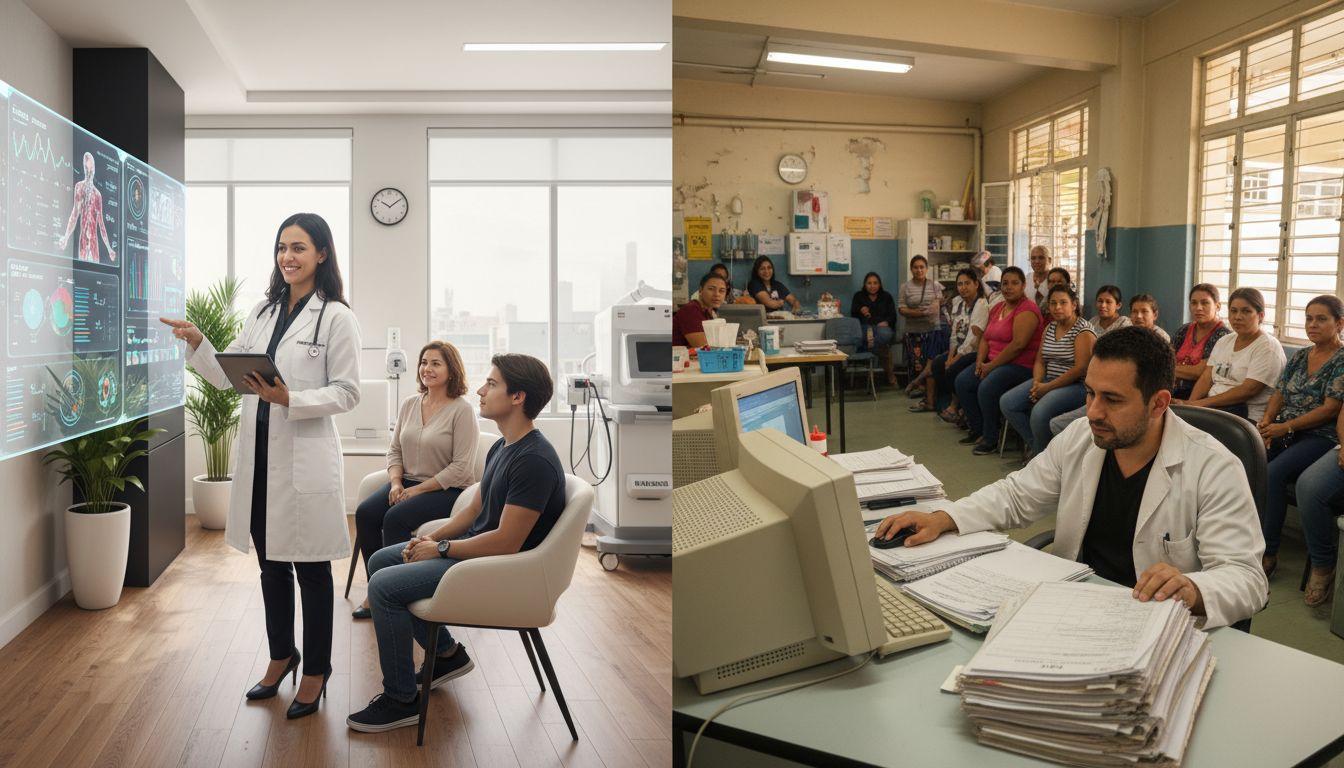
Comparison between manual and digital records in clinical documentation:
| Appearance | Manual registration | Digital register |
|---|---|---|
| Ease of access | Limited | Immediate and remote |
| Security | Low risk of physical leakage | Advanced encryption and access control |
| Readability | It can generate errors due to typing. | Uniformity and clarity in format |
| Data review | Requires additional time | Allows quick editing and automatic verification |
Professional advice: Quickly review your digital records immediately after completing them to correct any potential typos or inaccuracies while the details are still fresh in your memory.
Step 5: Verify the quality and consistency of the generated documentation
Once the initial digital records are completed, you need to conduct a thorough review to ensure the accuracy and consistency of the clinical documentation. The goal is to detect and correct any potential inconsistencies before they become a more significant problem.
Clinical documentation review reduces diagnostic errors and establishes a reliable foundation for patient monitoring. Develop a systematic review protocol that includes the following elements: check for consistency between different sections of the report, verify that there are no contradictions in the recorded information, confirm that all relevant demographic and clinical data are complete and legible.
Pay special attention to the accuracy of the medical terms used and ensure your observations are objective and evidence-based. Compare the documentation with the original interview notes to ensure no important details were lost during the digitization process. If you find any inaccuracies or information gaps, consider performing a second review with the patient or consulting additional sources to complete the record.
Professional advice: Create a customized checklist with the critical points you should always review in your clinical documents to maintain a consistent standard of quality.
Optimize your mental health clinical interviews with Itaca
The correct structuring and documentation in clinical interviews is a constant challenge for mental health professionals seeking quality, accuracy, and efficiency. This article highlights the importance of preparing the right environment, establishing a strong therapeutic relationship, and accurately recording clinical data. However, administrative tasks and record management can consume valuable time that could be spent with your patients.
Itaca is an AI-powered clinical assistant designed to alleviate those burdens. It automates the transcription of in-person and video consultations, generates well-structured clinical notes, and helps summarize complex information with transparent evidence. This allows you to focus on the quality of care without sacrificing the rigor of your documentation. Discover how Itaca can easily integrate into your routine without altering your current methods, enhancing the quality of your documentation and improving the traceability of your decisions.

Don't wait any longer to transform how you manage mental health initial assessments. Explore our Guides to better understand all the functionalities. Review the News and compare solutions in the Product Comparisons. Visit now Itaca and takes the step towards a more automated, reliable, and patient-centered clinical practice.
FAQ
How can I prepare a suitable environment for a mental health clinical interview?
To prepare a suitable environment, ensure the space is private and quiet, free from interruptions. Place comfortable chairs at a distance that facilitates eye contact and make sure you have all necessary documents ready before beginning the interview.
What type of questions are effective for a patient's initial assessment?
Open-ended questions are effective for allowing the patient to express themselves, such as “How has this situation affected your daily life?”. Alternate with closed-ended questions to obtain specific information, such as “How long have you been experiencing these symptoms?”.
What steps should I follow to digitally record clinical data?
To digitally record clinical data, first organize the information into categories such as demographics and medical history. Then, use a platform that ensures data confidentiality and security, making sure to be specific in your notes.
How do I verify the quality and consistency of the clinical documentation I have generated?
To verify the quality of the clinical documentation, review the consistency between the various sections of the report and confirm there are no contradictions. Use a custom checklist to ensure all data is correct and complete.
What goals should I define when establishing a therapeutic relationship with a patient?
When setting goals, ask open-ended questions to identify the patient's expectations, such as, “What do you hope to achieve with therapy?” Ensure that the goals are clear, realistic, and adjustable as treatment progresses.
What are the key categories I should cover when structuring a clinical interview?
Key categories include personal and family history, current symptoms, social and occupational functioning, and treatment expectations. Organize your questions within these categories to obtain a comprehensive patient assessment.



Leave a Reply