



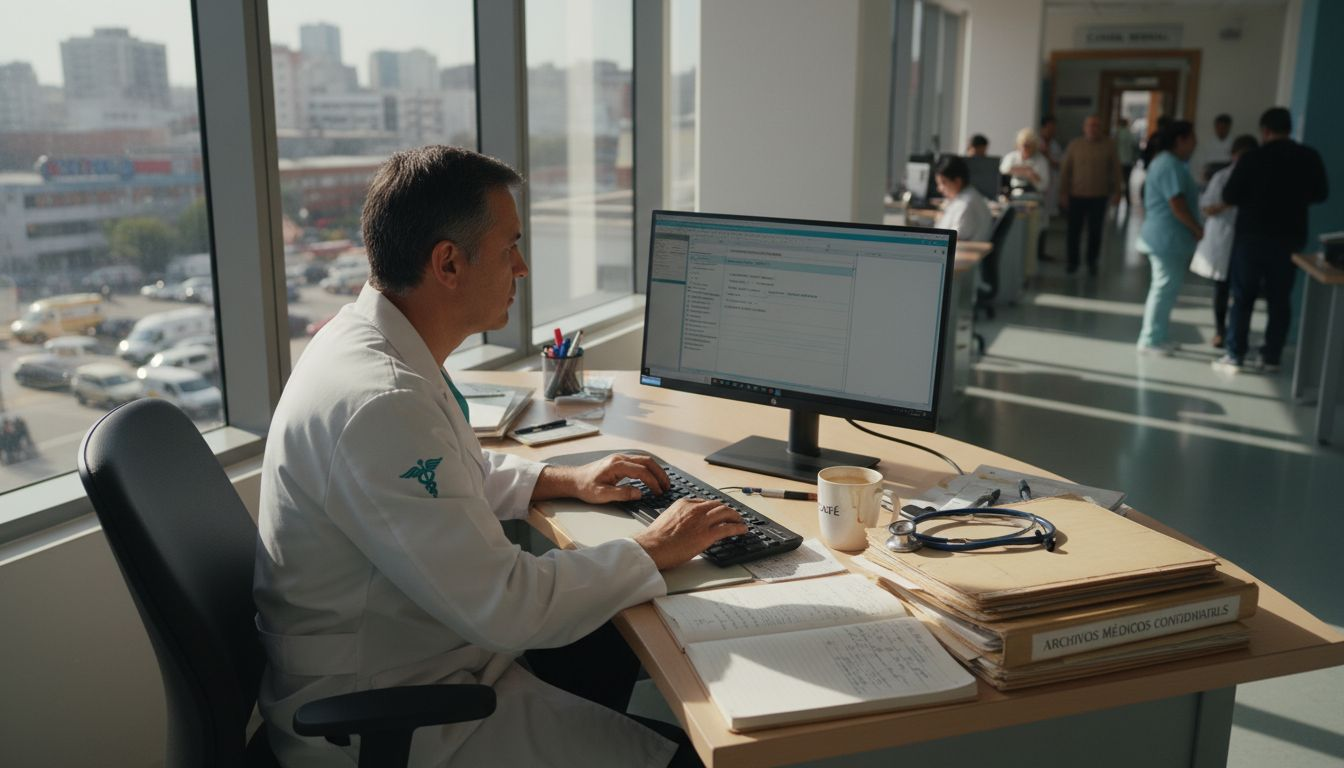
Every hospital day requires quick decisions with accurate and accessible medical information. Simplifying clinical documentation is no longer just a matter of efficiency, but of bringing more safety and quality to patient care. The electronic medical record offers a unified, multimedia record capable of improving coordination between professionals and reducing frequent errors resulting from incomplete or inconsistent documentation. Discover how these digital systems transform daily work and enhance personalized care.
Table of Contents
- Definition and key concepts of electronic medical records
- Types of systems: hce, emr and modern variants
- Main innovative features and functionalities
- Legislation and privacy in spain and europe
- Advantages, challenges and risks in today's clinic
- Comparison with paper medical records and alternatives
Main Conclusions
| Point | Details |
|---|---|
| Electronic Health Record (EHR) | The EHR enables comprehensive and digital management of medical information, improving the coordination and quality of healthcare. |
| Types of Systems | There are different variants of electronic medical record systems that are adapted to the specific needs of each clinical setting. |
| Advanced Functions | Modern electronic medical records offer analysis tools, intelligent documentation and interoperability to optimize patient care. |
| Legal Aspects | Legislation in Spain ensures data protection and patient rights, and it is crucial to update security protocols in clinical environments. |
Definition and key concepts of electronic medical records
The electronic medical record (EHR) represents a revolutionary digital system for managing patients' medical information. Unlike traditional paper-based records, the EHR allows health data to be stored in an integrated manner, completely transforming how healthcare professionals document, share and consult medical information.
This multimedia system is characterized as a unified, personal record that incorporates information technologies to facilitate access and integration of clinical data. Electronic medical records systems function as a complete digital platform that allows information to be shared among different health care providers, significantly improving the coordination and quality of medical care.
The main components of an electronic medical record include:
- Complete record of the patient's medical history
- Previous diagnostic information
- Examination and medical test results
- Treatments performed
- Pharmacological follow-up
- Consultation and hospitalization notes
Professional advice: Always keep patient data up to date and verify the accuracy of the information to ensure an effective and secure electronic clinical record.
Types of systems: HCE, EMR and modern variants
Electronic health record systems have several variants that respond to different clinical needs. Electronic Health Record Systems (EHR-S) include multiple modalities that go beyond a simple digital record, offering solutions adapted to different healthcare environments.
Main types of electronic medical record systems:
- Electronic Health Record (EHR/EHR)
- Comprehensive and longitudinal medical record
- Ability to share information among multiple vendors
- Complete view of the patient's medical history
- Electronic Medical Records (EMR)
- Focused on a single clinical setting
- Information limited to a specific practice or institution
- Reduced interconnection capacity
- Advanced Multimedia Systems
- Integration of multiple formats (text, image, video)
- Multi-platform accessibility with seamless information exchange
- Clinical data analysis tools
Professional advice: Carefully evaluate the features of each system before implementing it to ensure that it meets the specific needs of your medical practice.
Below is a table comparing the main types of electronic medical record systems and their suitability for different clinical settings:
| Type of system | Recommended environment | Level of integration | Ease of adoption |
|---|---|---|---|
| Electronic Health Record (EHR) | Hospitals, regional networks | Very high | Requires initial training |
| Electronic Medical Record (EMR) | Individual offices | Limited | Simple implementation |
| Advanced Multimedia Systems | Diagnostic centers, research | Complete | Progressive adaptation |

Main innovative features and functionalities
Modern electronic medical records integrate advanced functionalities that radically transform traditional medical practice. These systems are not simple repositories of information, but dynamic platforms that optimize healthcare data management, significantly improving the quality of patient care.
Key features include:
- Intelligent Documentation
- Automatic recording of clinical data
- Reduction of errors due to manual transcription
- Structured report generation
- Multi-platform interoperability
- Compatibility between different health systems
- Real-time clinical information exchange
- Secure access from multiple devices
- Advanced Analysis Tools
- Clinical decision support
- Identification of epidemiological patterns
- Risk alerts and personalized monitoring
Professional advice: Implement a progressive digitalization strategy that allows your team to gradually adapt to new technologies without saturating existing processes.
Legislation and privacy in Spain and Europe
Spanish legislation on electronic medical records establishes a robust regulatory framework that protects patients' fundamental rights. The laws in force guarantee confidentiality, privacy and controlled access to health information, establishing clear limits for the handling of sensitive personal data.
The main legal aspects include:
- Fundamental Legal Framework
- General Health Law 14/1986
- Law 41/2002 on patient autonomy
- Law 16/2003 on the cohesion of the National Health System.
- Data Protection Principles
- Regulation of restricted access to medical records
- Differentiated user levels
- Periodic security audits
- Patient Rights
- Informed consent
- Right to confidentiality
- Control over your medical information
- Possibility to request access restrictions
Professional advice: Always keep security protocols up to date and conduct regular data protection training for your medical team.
Advantages, challenges and risks in today's clinic
Electronic health records represent a fundamental transformation in modern medical practice, offering a complex landscape of benefits and challenges that healthcare professionals must understand and manage strategically.
Main advantages:
- Improved availability of clinical data
- Significant reduction of medical errors
- Clinical decision support
- Enhancing continuity of care
Key challenges and risks:
- Technological Challenges
- Learning curve for professionals
- Resistance to technological change
- Interoperability problems between systems
- Security Risks
- Personal data vulnerability
- Potential confidentiality breaches
- Need for robust security protocols
Professional advice: Implement a gradual technology adoption strategy that prioritizes continuous training and information security.
To understand the practical impact, the following table summarizes the key benefits and safety considerations in adopting the electronic health record:
| Main benefit | Concrete example | Safety consideration |
|---|---|---|
| Immediate availability | Access to recent results | Strict access control |
| Error reduction | Automatic alerts in prescription | Encryption and data protection |
| Improved coordination | Sharing among specialists | Traceability of queries and changes |

Comparison with paper medical records and alternatives
Electronic systems radically transform traditional medical documentation, offering innovative solutions that overcome the limitations of paper records.
Comparison of systems:
- Paper Medical History
- Manual and handwritten documentation
- High probability of errors due to illegibility
- Difficulty in sharing information
- Complex physical storage
- Electronic Health Record
- Fast and secure access to up-to-date information
- Significant reduction of errors
- Collaboration between suppliers
- Efficient data management
- Hybrid Alternatives
- Transition systems
- Partial digitization of documents
- Combination of physical and electronic records
Professional advice: Implement a gradual migration strategy that allows for a smooth transition between systems, minimizing disruption to clinical processes.
Transform electronic medical records management with Itaca
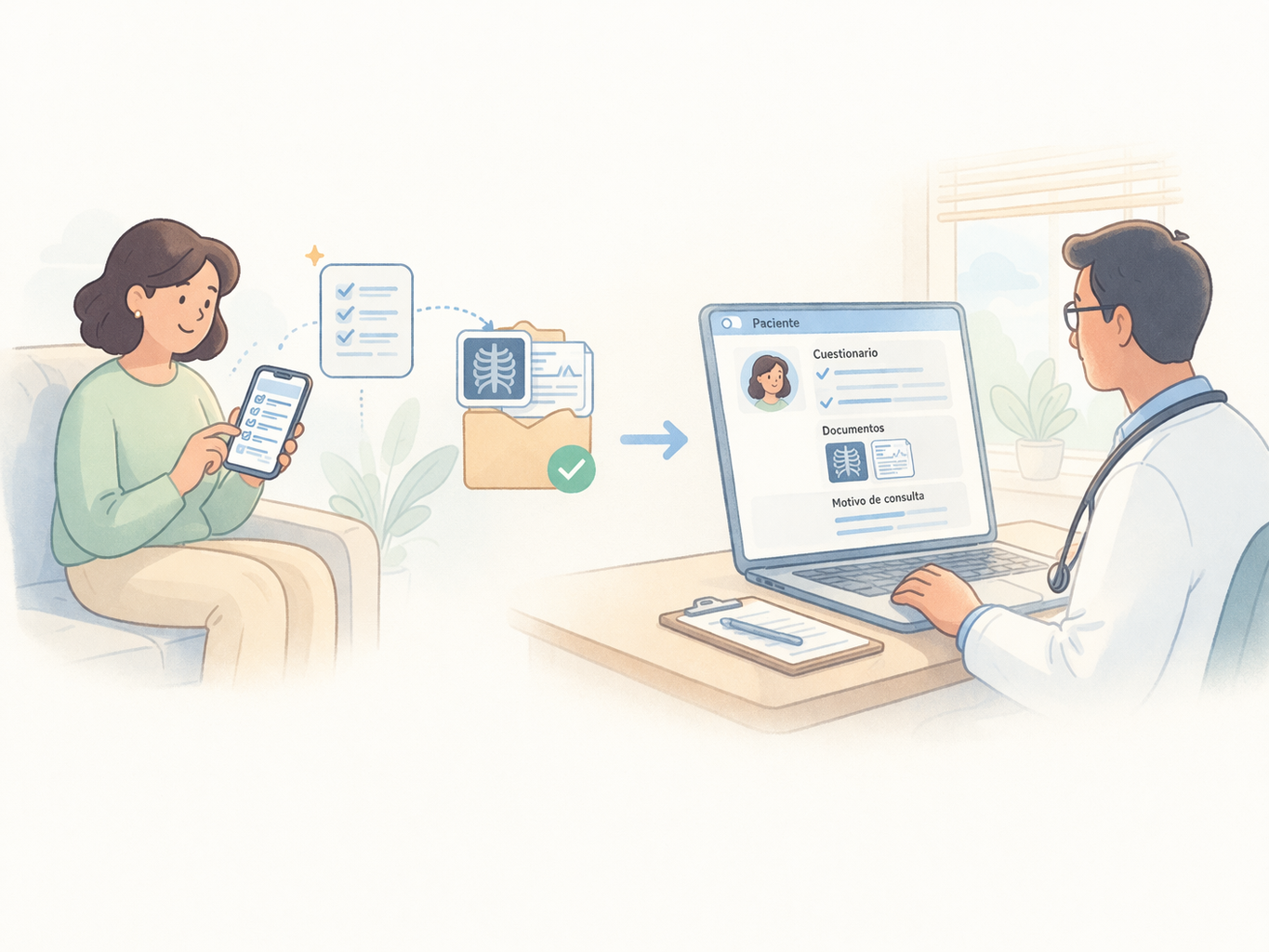
The adoption of electronic health records presents key challenges such as interoperability, information security and the need for intelligent documentation to streamline clinical work. Many professionals feel the burden of administrative time and the complexity of sharing reliable data between teams. Itaca is designed to alleviate these concerns by automating burdensome tasks such as transcribing consultations and generating structured clinical notes, while respecting privacy and control over data.

Discover how to empower your medical practice with innovative solutions and seamless integration into your current workflows. Visit Guides - Itaca to learn how to improve the quality and traceability of your clinical records. Explore our News - Itaca and join those who are already experiencing less administrative burdens and more time for their patients. Take the next step toward efficiency today at https://itaca.ai.
Frequently Asked Questions
What is the electronic medical record?
The electronic health record (EHR) is a digital system that allows for the comprehensive management of patients' medical information, facilitating its documentation, access and sharing among different healthcare providers.
What are the main advantages of using electronic medical records?
Electronic medical records improve the availability of clinical data, reduce medical errors, support clinical decision making and enhance continuity of care.
What are the differences between EHR and EMR?
The EHR offers a comprehensive medical record that can be shared among multiple providers, whereas electronic medical records (EMRs) focus on a single clinical setting and have limited interconnection capabilities.
How is privacy ensured in electronic medical records?
Current legislation establishes regulations that protect the confidentiality and privacy of data, including restricted access, periodic security audits and patients' rights over their medical information.
Leave a Reply