



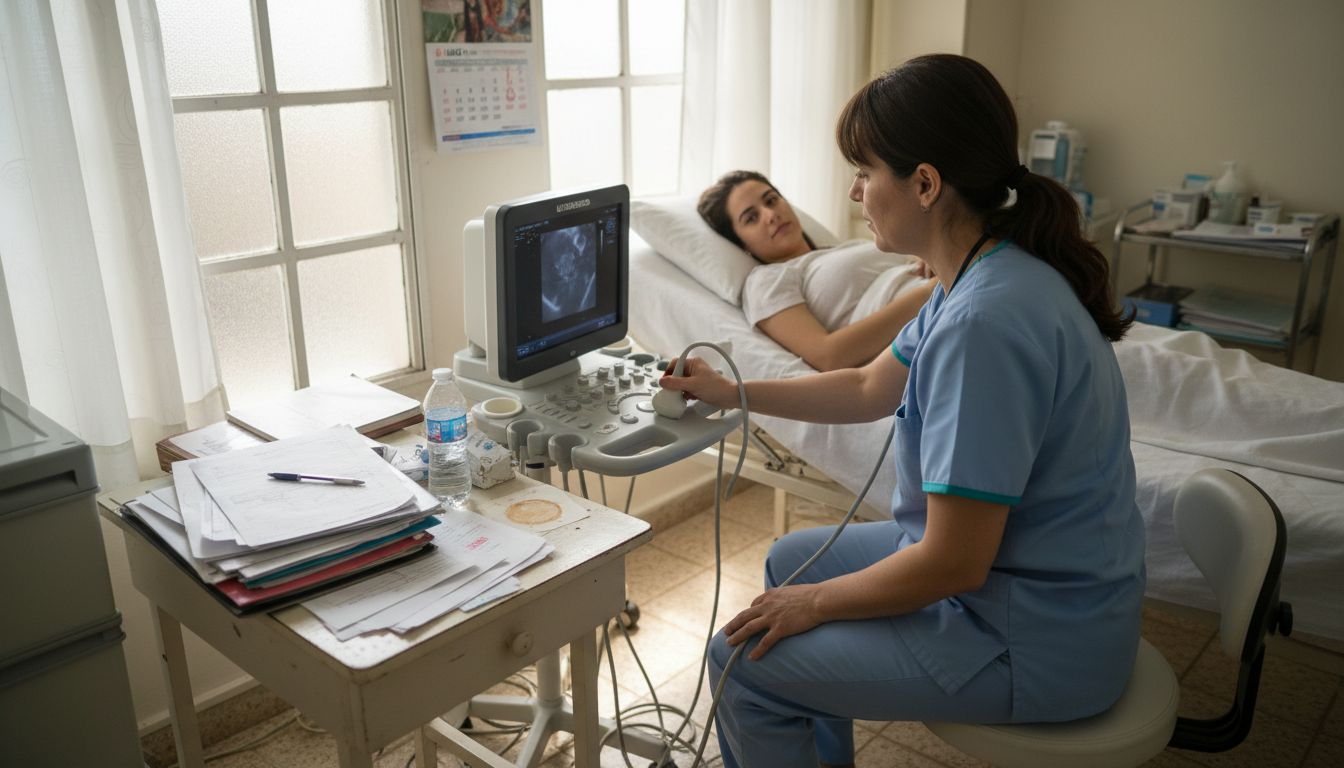
AI in obstetrics can help by organizing clinical documentation without replacing professional judgment, review, or responsibility. In a gynecology-obstetrics consultation, the note typically includes maternal-fetal context, reason for visit, history, available studies, findings, plan, follow-up, and pending items. If this information is scattered, the next professional may lose continuity.
The goal is not for AI to decide for the obstetrician or to turn care into an automatic protocol. The goal is to prepare a revisable clinical draft so that the professional does not start from a blank page after the consultation. Itaca helps organize the context; the professional reviews, corrects, approves, and signs when the note reflects the actual care.
For the general framework of assisted documentation, see clinical notes with AI. For the specific format, see the Gynecology and obstetrics template.
Why does obstetric documentation need clear context
Obstetric documentation does not just describe an isolated visit. It frequently connects previous information, current progress, studies, indications, communication with the patient, follow-up, and coordination with other professionals. A clear note allows for an understanding of what was reviewed, what remains pending, and what decisions were made during care.
In clinical teams, that clarity matters even more. There can be shift work, different locations, receptionists coordinating schedules, nurses recording vital signs or procedures, and professionals reviewing progress at different times. A well-structured note helps ensure that relevant information doesn't rely on individual memory, scattered messages, or late documentation.
What should a useful obstetric note include
The exact structure depends on the workflow of each professional or clinic. Itaca does not need to publish the internal logic of its templates to explain the expected outcome: a useful obstetric note should make visible the information that allows for continuity, review, and follow-up.
Reason for consultation and patient context
The note should allow for understanding why the patient is seeking consultation, what information she provides, what documents or studies are available, and what history is relevant for the encounter. When a piece of information comes from the patient, an external document, or a professional's observation, it is advisable for the draft to preserve that distinction for review.
Relevant gynecological and obstetric history
Background information may include gynecological, obstetrical, surgical, family history, medications, or allergies, as appropriate for the case. AI can help avoid missing data mentioned during the conversation, but it should not complete dates, diagnoses, dosages, or results that are not available in the source. If something is missing, it should be left pending for confirmation.
Findings, studies, and evaluation
A good note separates what the patient reports, what is observed during the encounter, the studies reviewed, and the professional assessment. This separation prevents a comment from being recorded as a confirmed finding or incomplete information from appearing definitive. The professional retains clinical interpretation and decides what remains in the final note.
Plan, track, and pending items
The plan should be written in a way that allows continuity: documented instructions, requested studies or controls, responsible parties, dates when applicable, pending confirmations, and criteria explained to the patient. AI can organize this content; the professional validates that it is correct, sufficient, and consistent with the care.
AI as documentation support, not as a clinical protocol
AI-generated documentation should be treated as a draft until reviewed by a professional. This is especially important in gynecology and obstetrics because the context can change between visits, external documents may exist, sensitive information may be present, and there may be pending items that should not be completed by inference.
Before saving or signing, it is advisable to verify that:
- the note corresponds to the correct patient and encounter;
- the information referred to, observed, and evaluated is clearly separated;
- studies, dates, doses, and results are not completed without a source;
- the earrings are visible for tracking;
- the plan reflects what the professional decided and explained;
- The final note remains under professional review, approval, and signature.
To elaborate on this flow, see Signature, review, and traceability of clinical notes.
Illustrative example of a gynecology-obstetrics note
The following example is fictional and summarized. It shows the type of information that a well-organized note can make visible without publishing Itaca's exact template, prompts, or internal rules.
Gynecological-obstetric consultation: demonstrative example
Context. Patient presents for a check-up with previous documents available. Reason for consultation, relevant history, medications, and reported allergies are recorded.
Revised information. The draft separates data referred to by the patient, reviewed documents, findings observed during care, and pending studies to confirm.
Plan. Conversations, studies or controls requested, follow-up, and pending questions for the next appointment are documented.
This example does not substitute professional judgment or represent medical advice. It serves to show how an AI tool can order the draft before clinical review.
Obstetrics in Clinics and Medical Equipment
In a clinic, obstetric documentation doesn't just reside in the office. It can begin with the appointment schedule, be completed during care, incorporate external documents or studies, and continue with follow-up. When multiple professionals are involved, the structure of the note helps maintain a shared clinical memory without exposing sensitive information to those who shouldn't see it.
For clinics and teams, Itaca helps maintain:
- patient context before attending;
- structured drafts for professional review;
- shared templates when the team needs consistency;
- continuity between shifts, locations, and professionals;
- Administrative visibility into usage and access without making clinical information available to everyone.
For the complete operational approach, see Clinic software.
Security, privacy, and obstetric data
Gynecological and obstetric information is sensitive. Itaca complies with the applicable HIPAA requirements for our operation, works with cloud providers under BAA agreements, encrypts information in transit and at rest, and does not use patient clinical data to train models. The information belongs to the user and their organization; it is not sold or provided to third parties for commercial purposes unrelated to the service.
In practice, a clinic must be able to control who accesses patients, conversations, documents, drafts, and signed notes. It also needs traceability to review usage, access, and team activity. For more details, see Security and privacy in clinical notes with AI.
How to evaluate an AI tool for obstetrics
Before incorporating AI into obstetric documentation, it's advisable to review whether the tool understands the actual flow of the consultation. It's not enough to transcribe audio or summarize a conversation. For it to be useful in clinical practice, it must produce a revisable draft, respect roles, maintain privacy, and allow the professional to retain control.
A practical evaluation may include these questions:
- Does the note separate referred data, findings, reviewed documents, assessment, and plan?
- Mark missing information instead of inventing it?
- Does it allow adapting templates without exposing prompts or internal logic?
- Can the professional review, edit, approve, and sign before the note is final?
- Can the clinic administer role-based access and track team activity?
- Does the platform protect sensitive data and not use it to train models?
How does Itaca fit into a gynecology and obstetrics consultation?
Itaca can be used from ambient audio, video calls, clinical documents, or quick notes. The platform organizes the available context and prepares a structured clinical draft for review. The professional retains clinical decision-making, editing, approval, and final signature.
For individual practice, this reduces the friction of documenting after a visit. For a clinic, it helps make gynecological and obstetric documentation more consistent among professionals, locations, and shifts, without forcing the team to change how they provide care.
Frequently Asked Questions
Does AI replace obstetric assessment?
No. AI helps prepare a draft of documentation. Clinical evaluation, interpretation, decision-making, approval, and final signature are the responsibility of the professional.
What can an AI obstetric note organize?
Reason for consultation, patient context, relevant history, reviewed studies or documents, findings, assessment, plan, follow-up, and pending items. The final content must be reviewed by the professional.
Is the exact Itaca template published?
No. The public examples are illustrative. The internal templates, rules, and prompts are not shown publicly.
Can a clinic use its own gynecological and obstetrical form?
Yes. A clinic can upload an example of the format they already use, and Itaca will convert it into a reusable template, without requiring the team to write prompts or publish their internal logic.
Does Itaca use clinical data to train models?
No. Clinical data belongs to the user and their organization; it is not used to train models or sold to third parties for commercial purposes unrelated to the service.


Leave a Reply