




Finding the balance between administrative efficiency and quality of care can seem like a constant challenge in any hospital in Latin America. This problem directly affects the time available to dedicate to patients and the amount of paperwork that falls on doctors. The Hospital administrative efficiency it doesn't just mean completing tasks quickly, but transforming processes and resources to achieve better clinical outcomes with less effort. Here you'll discover why integrating processes, technology, and human capital is key to breaking myths and achieving more intelligent and sustainable hospital management.
Table of Contents
- Hospital Administrative Efficiency: Definition and Myths
- Key Administrative Areas and Processes
- Impact on quality of care and patient satisfaction
- Technologies and tools to optimize management
- Common Barriers and How to Overcome Them in Hospitals
- Expected results: reduction of documentation burden and time
Main Conclusions
| Point | Details |
|---|---|
| Administrative efficiency | Hospital administrative efficiency optimizes resources and processes to improve patient care. |
| Common myths | Misconceptions about efficiency can hinder progress, like thinking that cutting staff is the solution. |
| Technology and Training | The implementation of technology and continuous training are essential for improving hospital management. |
| Area Integration | Coordination between administrative areas is fundamental to achieving quality care and operational efficiency. |
Hospital Administrative Efficiency: Definition and Myths
The Hospital administrative efficiency It is defined as the systematic process of optimizing resources, processes, and management to achieve the best care outcomes with the least possible consumption of time and effort. Key Concepts in Hospital Management They reveal that this definition goes beyond simply completing tasks; it implies a comprehensive transformation of management systems.
There are several persistent myths about administrative efficiency that distort its true meaning and potential. Some of the most common include:
- To believe that efficiency means reducing staff
- Assuming that technology alone guarantees efficiency
- To think that current processes cannot be improved
- Consider documentation as an unnecessary burden
The reality is that hospital administrative efficiency requires a holistic approach that integrates processes, technology, and human capital. It's not about doing more with less, but about doing things intelligently and strategically.
True administrative efficiency does not seek to eliminate resources, but to optimize them to improve patient care.
From a technical perspective, bibliometric studies demonstrate that implementing evidence-based management strategies can significantly transform hospital systems. This involves:
- Analyze existing processes
- Identify areas for improvement
- Implement technology solutions
- Continuously train staff
Professional advice: Implement a quarterly review of your administrative processes to identify opportunities for continuous improvement and maintain high operational efficiency.
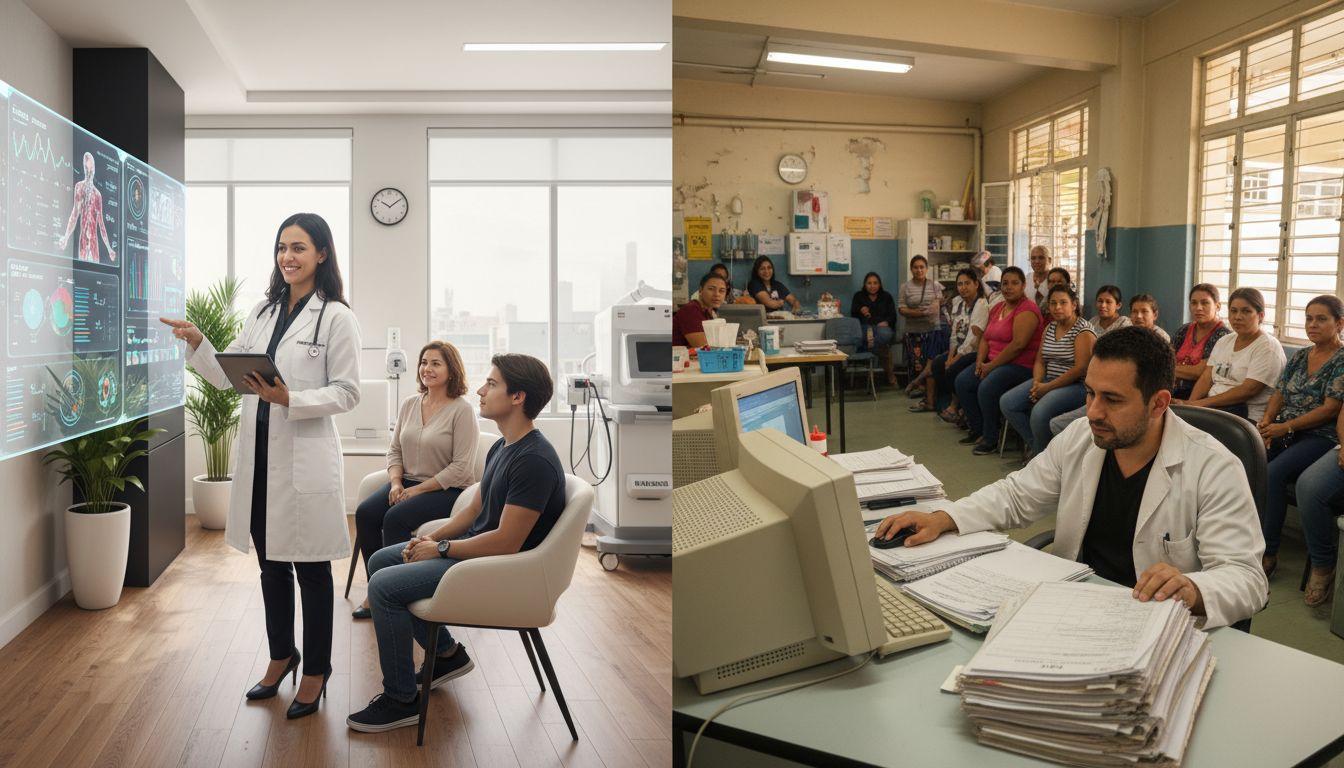
Below is a table comparing traditional and modern approaches in hospital administrative management:
| Focus | Main features | Impact on results |
|---|---|---|
| Traditional | Manual processes, physical documentation | Long times, high errors |
| Modern | Digital management, automated processes | Efficiency, error reduction |
Key Administrative Areas and Processes
Hospital administrative processes are the core of the operational and strategic management of any healthcare institution. Administrative processes in hospital efficiency They reveal that effective coordination between different areas is fundamental to ensuring quality care.
The key administrative areas include:
- Human Resources Management: Staff recruitment, training, and development
- Finance and BudgetExpense control, investments, and resource allocation
- Logistics and SuppliesMedical and Material Inventory Management
- Quality ManagementImplementation of protocols and continuous improvement
- Information SystemsElectronic Records Management and Technology
The harmonious integration of these areas determines the total operational efficiency of the hospital.
The administrative professional plays a fundamental role in each of these processes, being responsible for:
- Coordinate services between departments
- Apply institutional policies
- Manage internal communications
- Optimize workflows
- Implement technological improvements
Each area requires specific competencies and a systemic vision that allows for the efficient interconnection of processes. Technology and continuous training are essential tools for keeping these systems up-to-date and functional.

Professional advice: Develop digital process maps that allow visualization of the interconnection between different administrative areas to identify improvement opportunities.
These examples illustrate the relationship between administrative areas and their benefits to healthcare quality:
| Administrative area | Main benefit | Concrete example |
|---|---|---|
| Human Resources | Lower employee turnover | Higher talent retention |
| Information systems | Quick and secure information | Medical history accessible |
| Logistics and supplies | Waste reduction | Inventory Optimization |
Impact on quality of care and patient satisfaction
Hospital administrative knowledge directly impacts the quality of care and the patient experience. Administrative efficiency is not an isolated bureaucratic process, but a strategic element that fundamentally transforms medical care.
The main impacts can be categorized as:
- Reduction of waiting times
- Improvement in interdepartmental communication
- Reduction of administrative errors
- Hospital Resource Optimization
- More personalized and patient-centered care
Efficient administration frees up healthcare staff to focus on what truly matters: patient care.
Administrative efficiency impacts multiple dimensions of patient satisfaction:
- Faster and more transparent processes
- Lower probability of bureaucratic errors
- Better coordination between services
- Clearer and more accessible information
- More fluid and human global experience
Hospitals that invest in administrative optimization not only improve their operational efficiency, but completely transform patient perception and experience, generating a virtuous cycle of continuous improvement.
Professional advice: Implement digital feedback systems that allow patients to evaluate not only medical care but also the administrative experience.
Technologies and tools to optimize management
Administrative digitalization represents a revolution in modern hospital management. Current technologies make it possible to transform traditionally complex processes into agile, efficient, and patient-centered systems.
The most relevant technological tools include:
- Electronic Management SystemsAutomation of administrative processes
- Digital Medical RecordsUnified and accessible medical information registry
- Artificial Intelligence PlatformsPredictive analysis and resource optimization
- Integrated Communication ToolsReal-time interdepartmental coordination
- Patient Management ApplicationsPersonalized and efficient follow-up
Technology does not replace the professional; it enhances them by transforming their management and attention capabilities.
Innovative hospital management models highlight the importance of implementing technologies that improve:
- Data-driven decision-making
- Operational efficiency
- Quality of care
- Patient experience
- Institutional Sustainability
Digital transformation is not optional. It is a strategic imperative for hospitals seeking to remain competitive and offer cutting-edge care.
Professional advice: Conduct a semi-annual technology audit to identify new tools that can optimize your administrative processes.
Common Barriers and How to Overcome Them in Hospitals
Hospital administrative barriers represent complex challenges that require a strategic and multidimensional approach. Understanding these obstacles is the first step toward transforming hospital management and improving operational efficiency.
The main barriers identified are:
- Resistance to cultural change
- Deficiencies in technological training
- Fragmented interdepartmental communication
- Budgetary limitations
- Obsolete management systems
Overcoming these barriers is not just a technical challenge, but fundamentally a challenge of leadership and strategic vision.
The integration of multidisciplinary teams suggests strategies to address these obstacles:
- Implement continuous training programs
- Foster a culture of open communication
- Invest in adaptive management technologies
- Establish continuous improvement protocols
- Promote participatory leadership
Administrative transformation requires deep institutional commitment, where each team member understands their role in optimizing processes and healthcare quality.
Professional advice: Perform periodic diagnostics of administrative barriers, involving professionals at all levels to collaboratively identify and resolve obstacles.
Expected results: reduction of documentation burden and time
Hospital digital technologies are radically transforming administrative management, allowing for a significant reduction in the documentary burden and process optimization. Digitization not only streamlines procedures but also frees up valuable time for direct clinical care.
The main expected results include:
- Reduction of administrative time up to 60%
- Reduction of documentary errors
- Instant access to information
- Improved process traceability
- Resource release for direct care
Administrative efficiency isn't about reducing paperwork, but about optimizing every minute spent with the patient.
Efficient management models reveal quantitative and qualitative benefits:
- Reduced waiting times
- Greater accuracy in records
- Smoother interdepartmental communication
- Improvement in care quality
- Increase in job satisfaction
Digital transformation represents a silent revolution that redefines hospital processes, putting efficiency at the service of human care.
Professional advice: Implement a time and process measurement system that allows you to systematically identify and eliminate administrative bottlenecks.
Optimize hospital administrative efficiency with Itaca
The complexity and documentation burden faced by healthcare professionals directly affect the quality of care and patient satisfaction. This article highlights the importance of a Agile and strategic management, better interdepartmental communication and significant reduction of administrative times. Technology is presented as an indispensable ally to transform these processes, avoiding errors and freeing up time for human care.

Discover how Itaca, the AI-based clinical assistant, can enhance your administrative and clinical management. With automated consultation transcription, structured clinical note generation, and reliable information synthesis, Itaca helps reduce the documentation burden and increases the traceability of decisions. It not only optimizes your time but also strengthens your clinical judgment with transparent evidence. Don't wait any longer to improve care quality and operational efficiency with technological solutions designed for you. Learn more at Itaca and explore our best tips at Tips Archives and specialized guides in Guides Archives. Take the next step toward a more efficient and humane hospital.
FAQ
What is hospital administrative efficiency?
Hospital administrative efficiency is the process of optimizing resources, processes, and management to achieve the best healthcare outcomes with the least amount of time and effort possible.
What are common myths about administrative efficiency?
Some myths include the belief that efficiency means reducing staff, that technology alone guarantees efficiency, and that current processes cannot be improved.
How does administrative efficiency impact healthcare quality?
Efficient administration contributes to reduced waiting times, improved interdepartmental communication, and a decrease in administrative errors, which translates into more personalized and patient-centered care.
What technological tools are useful for optimizing administrative management in hospitals?
The most relevant tools include electronic management systems, digital health records, artificial intelligence platforms, and patient management applications, which allow for more efficient and agile administration.
Recommendation
- 7 key steps to optimize your medical administrative to-do list - Itaca
- Patient summaries: clearer, safer and aligned with your practice - Itaca
- Organize your patients better with custom labels | Itaca
- Approach complex cases with guided differential diagnosis and therapeutic plan - Itaca
- How to utilize HMO dental benefits for specialized treatments


Leave a Reply