
Dermatological follow-up needs to record location, distribution, evolution, treatment, and response in a comparable manner.
A clear note makes it possible to understand what the dermatologist observed, what the patient reported, and what has changed since the previous consultation.
Dermatological evolution needs location and dates
Descriptions may vary between encounters and the patient may provide photographs, reports, or previous treatments. Without dates and origin, it is easy to lose the sequence or attribute an interpretation to the tool that belongs to the specialist.
Evolution is best understood when each visit allows for the comparison of the same area, using consistent dates and terms, rather than starting the description from scratch.
Information worth keeping visible
Depending on the objective of the query, it is advisable to record:
- Reason, onset, and temporal evolution.
- Location, distribution, and laterality when applicable.
- Symptoms and factors reported by the patient.
- Dermatological examination truly documented.
- Previous or current treatments, use, and reported response.
- Assessment, plan, instructions, and follow-up.
A dermatological note is useful when it records location, distribution, symptoms, duration, treatment, and response in a comparable way across visits. Dates, provided photographs, and a consistent description make it possible to recognize the evolution without depending on the memory of the previous encounter.
A practical workflow before, during, and after
Before the appointment
Gather background information, previous treatments used, and submitted documents. Identify the change that prompted the consultation and the region that requires review.
During the meeting
Separate patient description, examination findings, and dermatological assessment. Use consistent terms and do not add characteristics that were not observed.
Upon closing and preparing the follow-up
Verify that the plan, the instructions for use, the indications, and the timing of the follow-up are understandable and correspond to what was agreed upon.
How Itaca can help
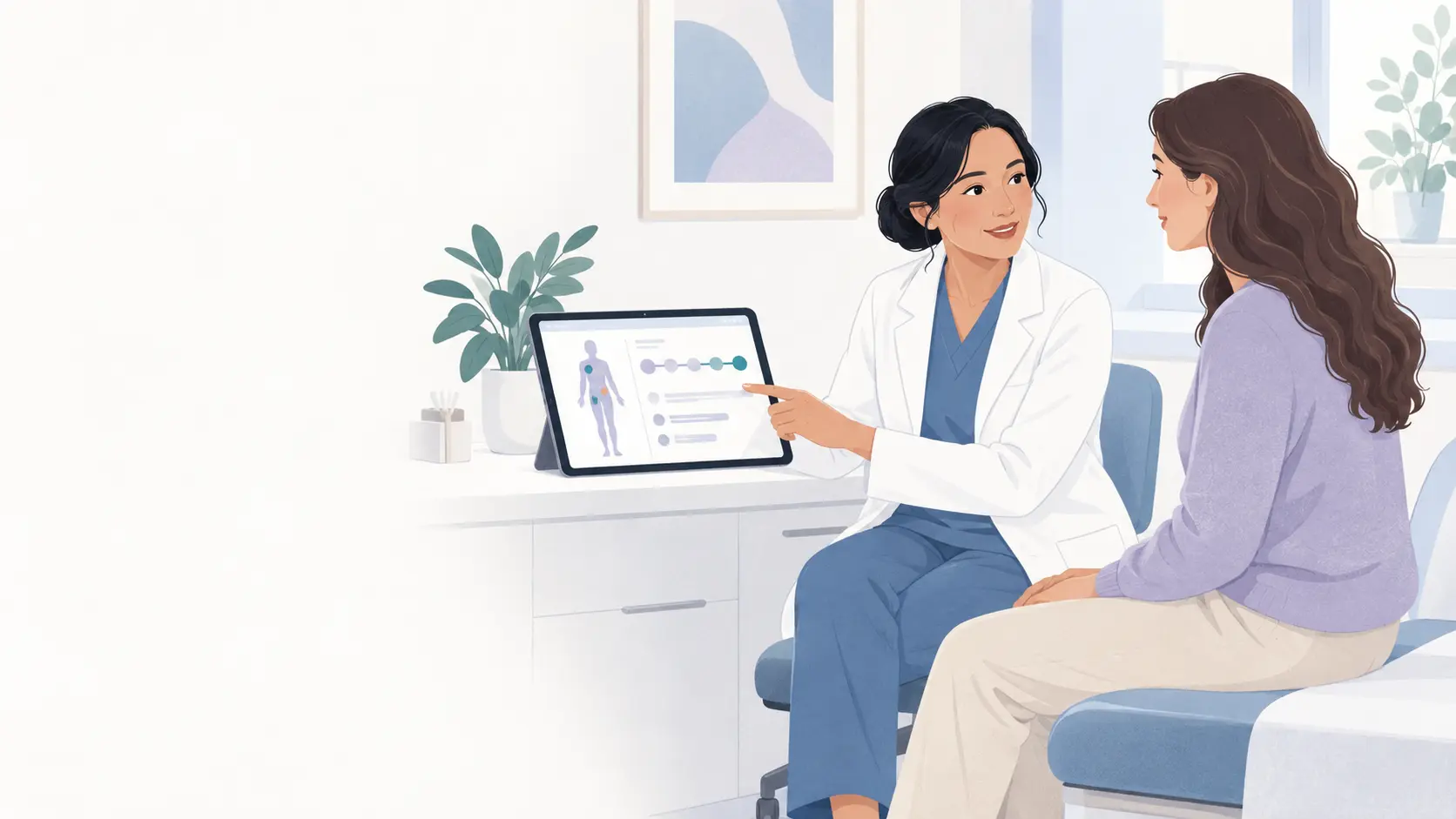
Itaca brings together the conversation, submitted photographs or reports, and quick notes into a structured draft. The dermatologist can open clinical answers with sources when you need to review treatments or recommendations.
The draft can organize chronology, location, treatment, and follow-up. Itaca does not interpret photographs, dermoscopy, pathology, or other studies.
The draft organizes what is referred, what is observed, and the materials provided into their context. The dermatologist completes the description and approves a note that is easy to compare.
Indicative structure for the note
A dermatological note may include:
- Reason and evolution.
- Background and relevant exhibitions.
- Location and layout.
- Reported symptoms.
- Documented exam.
- Prior treatments and response.
- Assessment, plan, and instructions.
Keep a consistent sequence for area, distribution, clinical description, symptoms, treatment, and response; the dates allow for clear comparison of changes.
Errors that make continuity difficult
- Omit location or laterality.
- Mix patient description with exam findings.
- Copy a previous description without indicating the change.
- Present an image as interpreted by Itaca.
- Leave instructions without a way of use or follow-up.
Comparison improves when each note retains a common structure and highlights changes instead of repeating text.
Document images without promising interpretation
If the practice uses clinical photographs, record the date, origin, and context according to your consent and privacy protocols. The image may be part of the context, but its evaluation is the responsibility of the dermatologist.
When incorporating a pathology report or other study, distinguish the provided text from the interpretation made during the consultation.
Example of continuity between queries
The first note records a lesion in a defined region, time of evolution, symptoms, previous treatments, and the dermatologist's examination.
During the follow-up, the draft compares distribution and symptoms, documents the actual use of the treatment, and leaves the response and next step under professional review.
In the example, follow how the same area and the same treatment are described in a comparable way among controls.
Frequently Asked Questions
Does it analyze dermatological photographs Itaca?
Not in this workflow. The dermatologist describes and interprets the images; Itaca organizes that description and progression into a reviewable draft.
What makes injury tracking comparable?
Keep the same location or zone, a dated description, the indicated treatment, and the observed or reported response. Distinguish new changes from previous findings.
Can I keep the format of my query?
Yes. You can convert the usual format into a template with localization, distribution, description, symptoms, treatment, response, and next steps.
Connect this guide to your workflow
The page AI for dermatology shows how to combine documentation, sourced answers, research, longitudinal context, and care-related documents. You can also review the clinical note templates and the guide for security and privacy.
Understandable instructions after the consultation
The patient document must use clear instructions on application, frequency, duration, and care explained by the dermatologist. Avoid transferring internal terms to the document that do not help follow the plan.
If follow-up depends on observing a change, state what must be documented and when the agreed-upon return is due. The draft can start from the note, but it needs review before being shared.
When comparing controls, keep the same terminology for localization, distribution, extent, and symptoms. That consistency makes it possible to read the evolution more quickly and avoids attributing changes to wording differences.

Leave a Reply