



When a patient checks in for a second time, the problem is not always evident.
There might be a slight accent mark difference in the last name. A middle name omitted. An updated phone number. Or simply a busy reception trying to quickly serve you.
But weeks later, the cost appears: clinical notes scattered between two files, appointments associated with the wrong record, and lost time trying to figure out which file existed first.
The question is simple: Does your medical software help prevent duplicate patient records before they become a problem?
New in Itaca: Duplicate Patient Detection

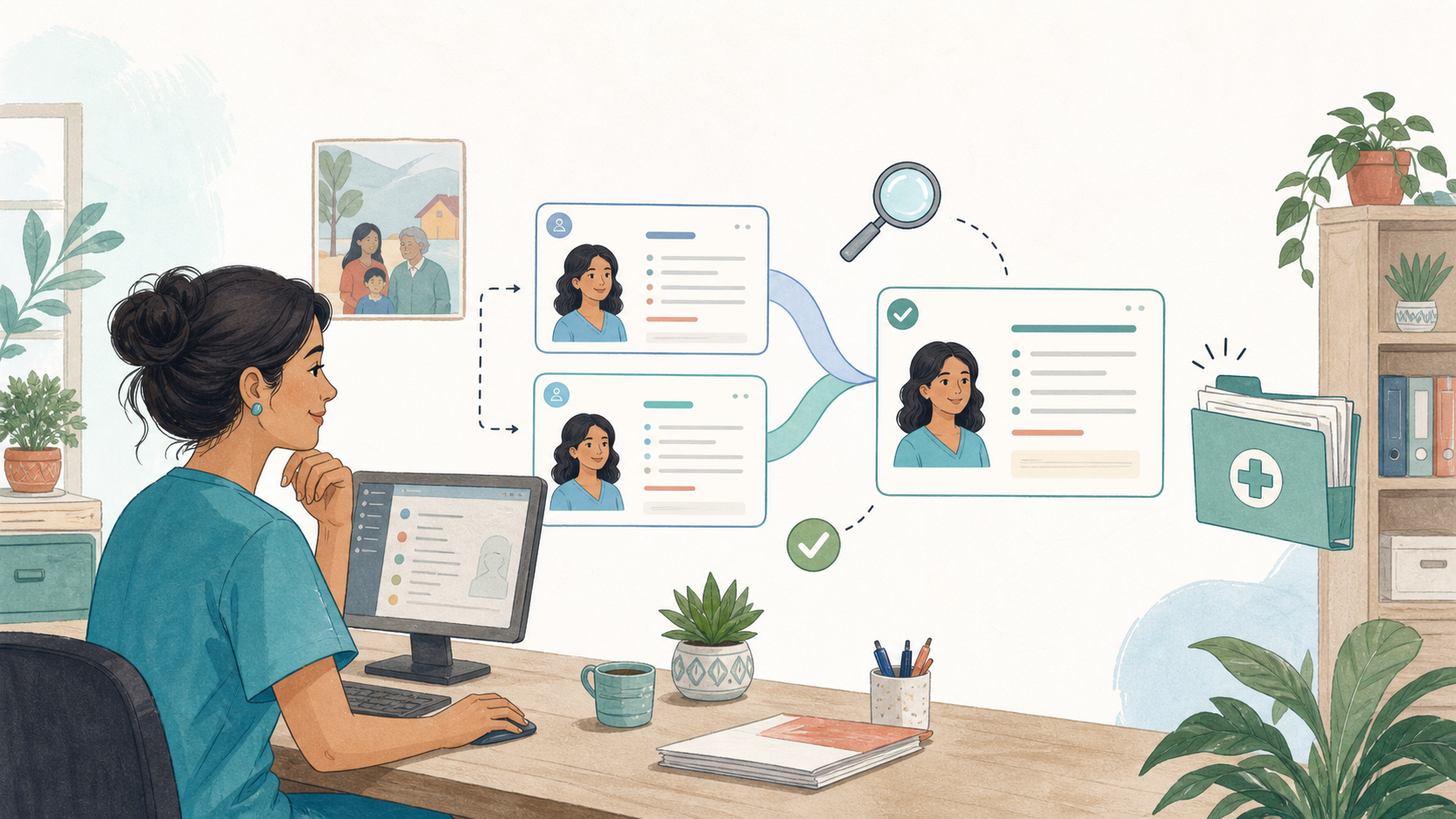
Now, when you create a patient or update relevant record data, Itaca checks if a similar patient already exists within your organization.
If you find a possible match, show a clear comparison between:
- The patient who is creating or editing.
- The existing file that could correspond to the same person.
The team can review the available data to make an informed decision, such as:
- Name.
- Date of birth.
- Telephone.
- Email.
- National identification.
Afterwards, you can edit again, save anyway, or open an existing patient.
A helpful warning, without blocking attention
Not all patients with similar data are the same person.
For this reason, Itaca does not block the creation of a record or automatically merge patients. The function presents a suggestion; the decision remains with the user.
This is especially important in clinics where patient flow cannot be stopped due to an uncertain match.
The detection searches for relevant signals, such as:
- Full name, including minor spelling variations or accents.
- Email.
- National identification.
- Data combinations, such as name and date of birth.
At the same time, avoid generating alerts for signals that are too weak. Sharing only a birth date should not be enough to assume a potential duplication.
Designed for your patients' real names
Patients don't always register with an identical format.
In Latin America, it's common to use two given names and two surnames. In other contexts, initials, middle names, compound surnames, or names in a different order appear.
Therefore, detecting duplicate patient records doesn't mean demanding that every field match exactly. It means identifying records worth reviewing, without turning every minor difference into a roadblock.
Fewer duplicate records, better continuity
A duplicate record might seem like an administrative detail. But over time, it affects patient tracking and team workflow.
Avoiding duplications helps to maintain:
- Clinical notes in the correct record.
- Better organized appointments and documents.
- More consistent contact information.
- Less administrative work to correct errors later.
- A clearer history of what happened with each file.
Traceability when you need to investigate
Sometimes the problem is detected days or weeks later.
When this occurs, authorized administrators can use the Itaca Activity Log to review the administrative history related to a patient: who created or updated the record and when each action took place.
This way, the clinical team maintains a simple workflow and administrators retain the necessary tools to investigate.
Now available at Itaca
Duplicate patient detection is available for team members who can create or edit patients.
It's a brief review at the time of saving. But it can prevent a small error from becoming two files, split information, and hours of administrative follow-up.
Try Itaca and keep your clinic's records more organized, consistent, and easy to review.


Leave a Reply