


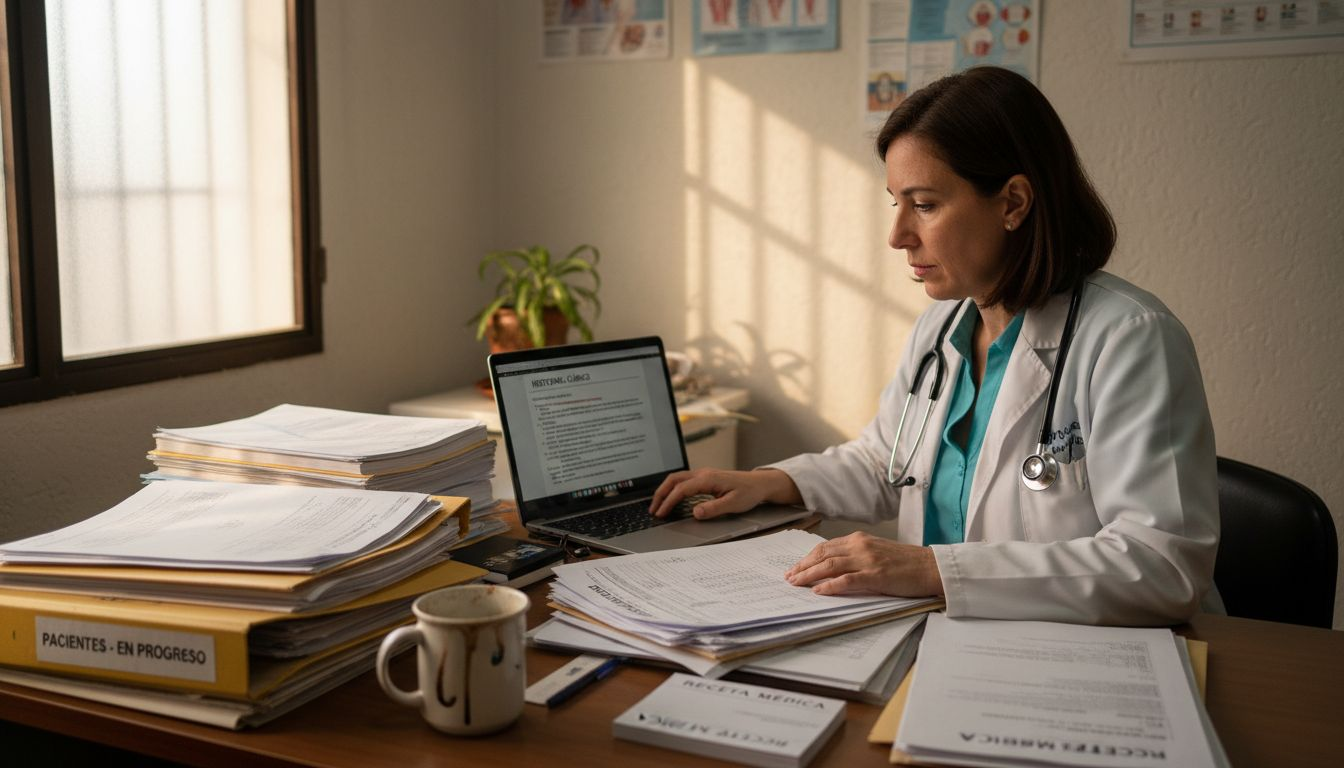
Each day, doctors in Spain dedicate up to 40 percent of their workday to administrative tasks, which limits the time available for clinical care. Optimizing the management of medical appointments has become fundamental for those seeking to focus more on the patient and less on paperwork. Discovering practical strategies and digital tools can make the difference between an overloaded practice and an efficient, patient-centered consultation.
Index
- 1. Prepare the medical history before the appointment
- 2. Use standardized templates for medical notes
- 3. Automate transcription and visit logging
- 4. Prioritize key clinical questions in the interview
- 5. Leverage digital assistants to summarize calls
- Implement patient tracking management systems
- 7. Foster effective communication with the healthcare team.
Quick Summary
| Key Message | Explanation |
|---|---|
| 1. Prepare the medical history before the appointment | Take care of communication and diagnosis when gathering accurate patient information before the consultation. |
| 2. Use standardized templates for medical notes | Templates streamline medical documentation, increasing accuracy and ensuring key information is not missed. |
| 3. Automate transcription and visit logging | Implementing transcription tools improves efficiency, reduces errors, and saves time in necessary documentation. |
| 4. Prioritize key clinical questions in the interview | Structure your questions to get relevant information, ensuring a more complete and effective diagnosis during the consultation. |
| 5. Foster effective communication with the healthcare team | Promoting clear and structured communication within a healthcare team improves collaboration and reduces the likelihood of errors. |
1. Prepare the medical history before the appointment
Preparing the medical history before the doctor's appointment is fundamental to ensure efficient and high-quality care. A well-structured medical history not only speeds up the diagnostic process but also significantly improves communication between the healthcare professional and the patient.
To develop a modern and effective medical record, it is crucial to collect detailed and accurate information. Build medical history automatically can drastically reduce preparation time. This process includes collecting patient identifying data, personal and family history, detailed medical history, previous physical examination, and previous clinical progress.
The main objective is to create a comprehensive document that provides an overall view of the patient's health status. This means going beyond simple demographic data and including relevant information about previous treatments, allergies, current medication, and any pre-existing medical conditions.
Some strategies for optimizing medical history preparation include:
- Use updated electronic record systems
- Ask the patient to complete a pre-appointment questionnaire
- Review and verify information before the medical appointment.
- Maintain a standardized format that facilitates reading and comprehension
It's important to remember that a well-prepared medical record not only benefits the doctor but also empowers the patient, allowing them to participate more actively in their healthcare process.
Professional advice: Develop a medical record preparation system that is replicable and efficient for each patient, leveraging technological tools to automate parts of the process.
2. Use standardized templates for medical notes
Standardized templates are a fundamental tool for optimizing medical documentation, allowing healthcare professionals to generate clinical notes quickly, accurately, and consistently. The importance of these predefined formats lies in their ability to structure information clearly and systematically.
Using templates doesn't mean losing customization. In fact, personalized note templates They can be adapted to each medical specialty and individual documentation style. These preset templates ensure that no critical detail is omitted during patient information recording.
The benefits of implementing standardized templates include:
- Significant reduction of documentation time
- Greater accuracy in medical information recording
- More efficient compliance with legal and administrative requirements
- Improvement in communication among healthcare professionals
- Ease of performing subsequent reviews and follow-ups
To implement these templates effectively, it is recommended to develop specific models for different types of queries and specialties, ensuring flexibility and adaptability.
Professional advice: Create a digital library of medical templates that you can quickly customize based on each patient's specific profile and needs.
3. Automate transcription and visit logging
The automation of medical visit transcription and recording has become an essential tool for optimizing professional efficiency and improving the quality of clinical documentation. Current technological solutions allow for a radical transformation of the medical information recording process.
Technology of Clinical transcription with voice recognition offers a revolutionary alternative to traditional documentation methods. These intelligent tools can capture and transcribe medical conversations with surprising accuracy, freeing healthcare professionals from tedious administrative tasks.
The benefits of automating transcription include:
- Significant reduction in time spent on documentation
- Greater precision in clinical information recording
- Possibility of generating instant reports
- Improved traceability of medical information
- Reduction of errors through manual recording
To effectively implement this strategy, it is crucial to choose tools that integrate naturally with existing workflows and ensure the confidentiality of patient information.
Professional advice: Select transcription systems that offer high accuracy and allow for quick and easy editing of the generated documents.
4. Prioritize key clinical questions in the interview
Prioritizing clinical questions is a strategic skill that allows medical professionals to obtain accurate and relevant information during a consultation. A structured and focused medical interview can make the difference between a superficial diagnosis and a truly comprehensive one.
To optimize information gathering, it is essential Formulate structured clinical questions that guide the conversation toward the most important aspects for diagnosis and treatment. The key is to divide the questions into general and specific categories that allow for a systematic exploration of the patient's health status.
Some criteria for prioritizing clinical questions include:
- Assess the urgency and severity of the symptoms
- Identify recent patterns or changes in health
- Consider relevant personal and family history
- Explore the impact of symptoms on quality of life
- Determine possible interference with current treatments
An effective strategy is to start with open-ended questions that allow the patient to freely narrate their experience, and then delve deeper with more specific and directed questions.
Professional advice: Practice the funnel technique in your clinical interviews, starting with general questions and progressing to more specific and precise inquiries.
5. Leverage digital assistants to summarize calls
Digital assistants have revolutionized how medical professionals manage consultation and call information. The ability to generate accurate and structured summaries allows for a significant optimization of time spent on clinical documentation.
A key tool for healthcare professionals are assistants who can Generate clinical notes from video calls automatically. These intelligent systems capture the most relevant details of each interaction, transforming conversations into structured and easily searchable documents.
The benefits of using digital assistants for summarizing calls include:
- Reducing the time spent on manual transcriptions
- Increased accuracy in the recording of information
- Possibility of generating standardized summaries
- Improved information traceability
- Quick access to key data from previous queries
To effectively implement this strategy, it is important to select tools that guarantee information confidentiality and integrate naturally with existing workflows.
Professional advice: Choose digital assistants that offer customizable summaries and allow for quick editing to maintain full control over medical documentation.
Implement patient tracking management systems
Patient management systems represent a fundamental tool for transforming modern healthcare, enabling comprehensive and personalized tracking of each patient. The digitization of clinical processes has revolutionized the way healthcare professionals monitor and support their patients' progress.
An effective strategy involves organize patients with custom labels that facilitate classification, tracking, and individualized attention. These systems allow for centralized information, simplified administrative processes, and improved communication with patients.
The benefits of implementing management systems include:
- Continuous and personalized health status monitoring
- Detailed and accessible medical history record
- Efficient scheduling of appointments and reminders
- Better communication between professionals and patients
- Clinical Resource Optimization
For a successful implementation, it is crucial to choose systems that are intuitive, secure, and adapt to the specific needs of each medical practice.
Professional advice: Select systems that not only manage information but also facilitate proactive and personalized communication with your patients.
7. Foster effective communication with the healthcare team.
Effective communication in healthcare teams is the core of safe, coordinated, and high-quality medical care. Building clear and dynamic communication channels can make the difference between a smooth clinical process and one filled with obstacles.
Use structured communication techniques How SBAR and IPASS protocols can radically transform the interaction between healthcare professionals. These methodologies allow for the concise transmission of critical information, significantly reducing the likelihood of errors and improving team coordination.
Some key elements for fostering effective caring communication include:
- Implement brief and focused meetings
- Practice active listening
- Establish clear communication protocols
- Promote an environment of respect and collaboration
- Use secure digital communication tools
It is essential to create a culture where all team members feel safe to express doubts, suggestions, and concerns, regardless of their hierarchy or role.
Professional advice: Dedicate five minutes at the start of each shift to conduct a brief briefing that aligns the team's objectives and priorities.
The following summary presents the main strategies described in the article for optimizing documentation and communication in medical settings.
| Strategy | Description | Benefits |
|---|---|---|
| Prepare the medical record before the consultation | Detailed compilation of relevant patient information before the consultation. | Facilitates diagnosis, improves communication, and empowers the patient. |
| Use standardized templates for medical notes | Creation of flexible predefined templates according to the medical specialty. | Reduce documentation time, ensure accuracy, and improve communication. |
| Automate transcription and visit logging | Use of technological tools to capture medical information through voice recognition. | Increase efficiency, improve traceability, and reduce errors. |
| Prioritize key clinical questions in the interview | Formulating structured questions for better data collection. | Facilitates comprehensive diagnoses and improves the quality of care. |
| Use digital assistants to summarize calls | Use of tools that generate automatic summaries of queries and meetings. | Optimize time, improve record accuracy, and ensure information traceability. |
| Implement patient tracking management systems | Centralization of medical information and improvement of administrative processes. | Facilitates personalized tracking and optimizes clinical resources. |
| Foster effective communication with the care team | Use of techniques and protocols to improve the transmission of clinical information. | Ensures coordination, reduces errors, and promotes a collaborative environment. |
Optimize your medical appointments with Itaca and save valuable time
The article presents a common challenge for many healthcare professionals: how to improve efficiency in medical consultations without losing quality in care or documentation. If you're looking to minimize administrative burden through tools that automate transcription, clinical note generation, and call summarization, Itaca is the solution designed for you.

Discover how Itaca can transform your workflow with an intelligent clinical assistant that respects your practice style and protects your patients' privacy. Don't wait any longer to enhance the quality of your records and dedicate more time to what truly matters: your patients. Explore our Guides for professionals and news on New Functionalities and starts today at Itaca.
FAQ
How can I prepare my patients' medical records more efficiently?
To streamline the preparation of medical records, use electronic record-keeping systems that automate data collection. This can reduce preparation time by 30–60% and improve communication between the doctor and the patient.
The advantage of using standardized templates in medical notes is that they ensure consistency, completeness, and efficiency. They prompt clinicians to include all necessary information, reduce the risk of errors or omissions, and can streamline the documentation process. This standardization also facilitates better communication and data analysis within and across healthcare organizations.
Standardized templates allow for clear and consistent recording of clinical information, which reduces documentation time. Implement specific models for each medical specialty to ensure flexibility and customization.
How can I automate the transcription of medical visits?
Automate transcription using speech recognition technology that converts conversations into written documents. This can reduce the time spent on manual documentation by up to 50%.
What clinical questions should we prioritize during a consultation?
Prioritize questions that assess the urgency and severity of symptoms. Start with open-ended questions and then delve into specific symptoms, which facilitates a more comprehensive diagnosis.
What benefits do I get from using digital assistants to summarize my medical calls?
Digital assistants generate automatic summaries of medical interactions, improving the speed and accuracy of documentation. Implement this technology to reduce manual transcription time and quickly access important clinical data.
How can I foster better communication with my care team?
Foster effective communication by implementing brief and clear meetings, and promoting active listening. You can establish a 5-minute briefing at the start of each shift to align team objectives and priorities.
Leave a Reply