


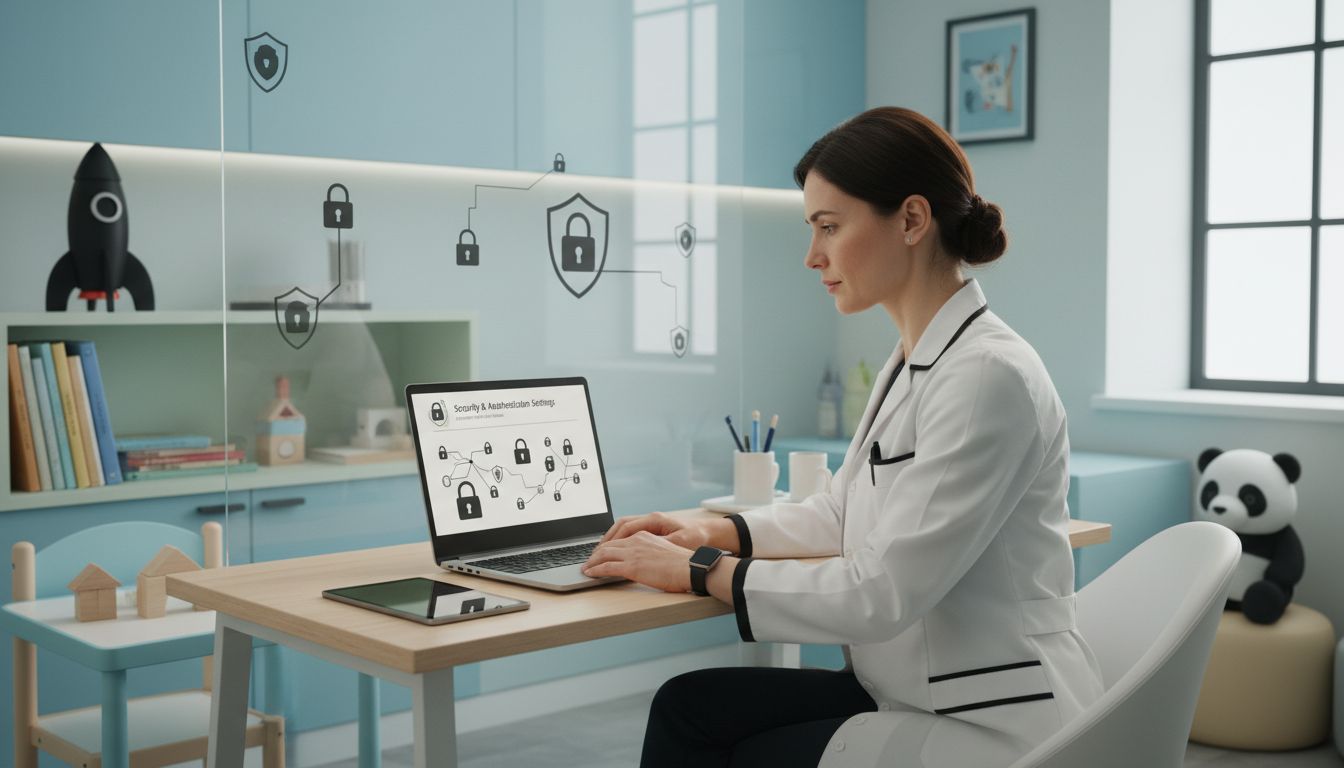
AI in pediatrics can be useful when it helps organize clinical documentation without taking away the pediatrician's review, judgment, and final responsibility. In a pediatric consultation, the note not only records symptoms: it may also need caregiver context, history, vaccinations, growth, development, home instructions, and follow-up.
The value isn't in producing automatic text for the sake of producing text. The value is in preparing a reviewable clinical draft so the professional doesn't start from a blank page after the visit. AI helps organize the context; the pediatrician reviews, corrects, approves, and signs when the note reflects the actual care.
What changes when pediatric documentation is supported by AI
Pediatric documentation usually gathers information from various sources: what the child reports when able to express it, what the mother, father, or caregiver explains, what the professional observes, relevant history, medications, allergies, vaccinations, and follow-up data. In high-volume consultations, this information can become scattered if the note is written late or pieced together from memory.
A well-used AI tool does not make decisions for the pediatrician. It helps transform conversations, clinical documents, or quick notes into a tidy draft for review. That draft should retain what's important, flag what's pending, and avoid completing information that wasn't available.
For the general framework of assisted documentation, see clinical notes with AI. For the specific format, see the Pediatric note template.
What should a useful pediatric note include
A useful pediatric note does not need to expose an internal template or turn the consultation into a rigid form. It should, however, make visible the context that aids in understanding the care and follow-up. In practical terms, it is advisable to review these areas.
Reason for consultation and source of information
In pediatrics, it's important to distinguish who provides each piece of information. A direct observation by the professional is not the same as a symptom reported by the caregiver or a statement from the patient. A good note can clarify the reason for consultation, the reported progression, who is accompanying the patient, and what information needs confirmation.
History, allergies, medications, and immunizations
AI can help avoid missing relevant medical history mentioned during a consultation, but the professional must validate that it corresponds to the patient and the current encounter. If a dose, date, or vaccine is unclear, the correct course of action is to leave it as pending data, not to complete it through inference.
Growth, development, and relevant findings
Depending on the reason for the visit, the note may need to separate growth, development, vital signs, physical examination, relevant findings, and family or school context. The structure should help review what is important without inventing normality or turning an isolated observation into a clinical conclusion.
Plan, caregiver instructions, and follow-up
In pediatrics, the plan should be clear for the clinical record and useful for follow-up. It can include indications, studies, explained warning signs, check-ups, pending items, and those responsible for the next action. The professional decides what remains in the clinical note, what is given as instructions to the caregiver, and what requires internal follow-up.
AI as a draft, not a substitute for pediatric judgment
An AI-generated note should be treated as a draft until a pediatrician reviews it. This is especially important in pediatrics because context may come from third parties, there may be incomplete information, and interpretation can change based on age, history, progression, and examination.
Before saving or signing, it is advisable to verify that:
- The patient and the encounter are correct.;
- what was reported by the caregiver does not appear as a confirmed finding;
- missing data is marked as pending;
- the evaluation maintains the appropriate level of certainty;
- the plan is clear, actionable, and consistent with the care;
- The instructions and follow-up should not contradict the professional's assessment.
Itaca prepares draft versions for review. The professional retains final editing, approval, and signature. To learn more about this workflow, see Signature, review, and traceability of clinical notes.
Illustrative example of a pediatric note
The following example is fictional and summarized. It shows the type of information a well-organized pediatric note can make visible without publishing Itaca's exact template, prompts, or internal rules.
Pediatric Consultation: Demonstrative Example
Context. Attended by caregiver due to respiratory condition for several days. Recorded referred evolution, relevant history, known allergies, and mentioned medications.
Evaluation. Observed findings are separated from what the caregiver reports. Unavailable data, such as the exact date of the last vaccine or medication dose, are flagged for confirmation.
Plan. Indications, alarm criteria explained to the caregiver, recommended follow-up, and pending items for the next visit are documented.
The example does not substitute professional judgment or represent medical advice. It serves to show how AI can help organize a draft before a pediatrician's review.
Pediatrics in clinics and medical equipment
When pediatric care occurs within a clinic, documentation must also support continuity between reception, professionals, locations, shifts, and follow-up. Not everyone needs to see everything. The flow must allow each role to access what is relevant to their work.
In pediatric teams, this may include:
- Organized context before consultation;
- Reviewable notes for the attending professional;
- Clear tracking when the professional or shift changes;
- Administrative visibility into usage and access without exposing clinical information to unauthorized individuals.;
- Shared templates to maintain consistency without forcing everyone to document every detail the same way.
For the team approach, see Clinic software.
Pediatric Safety and Data
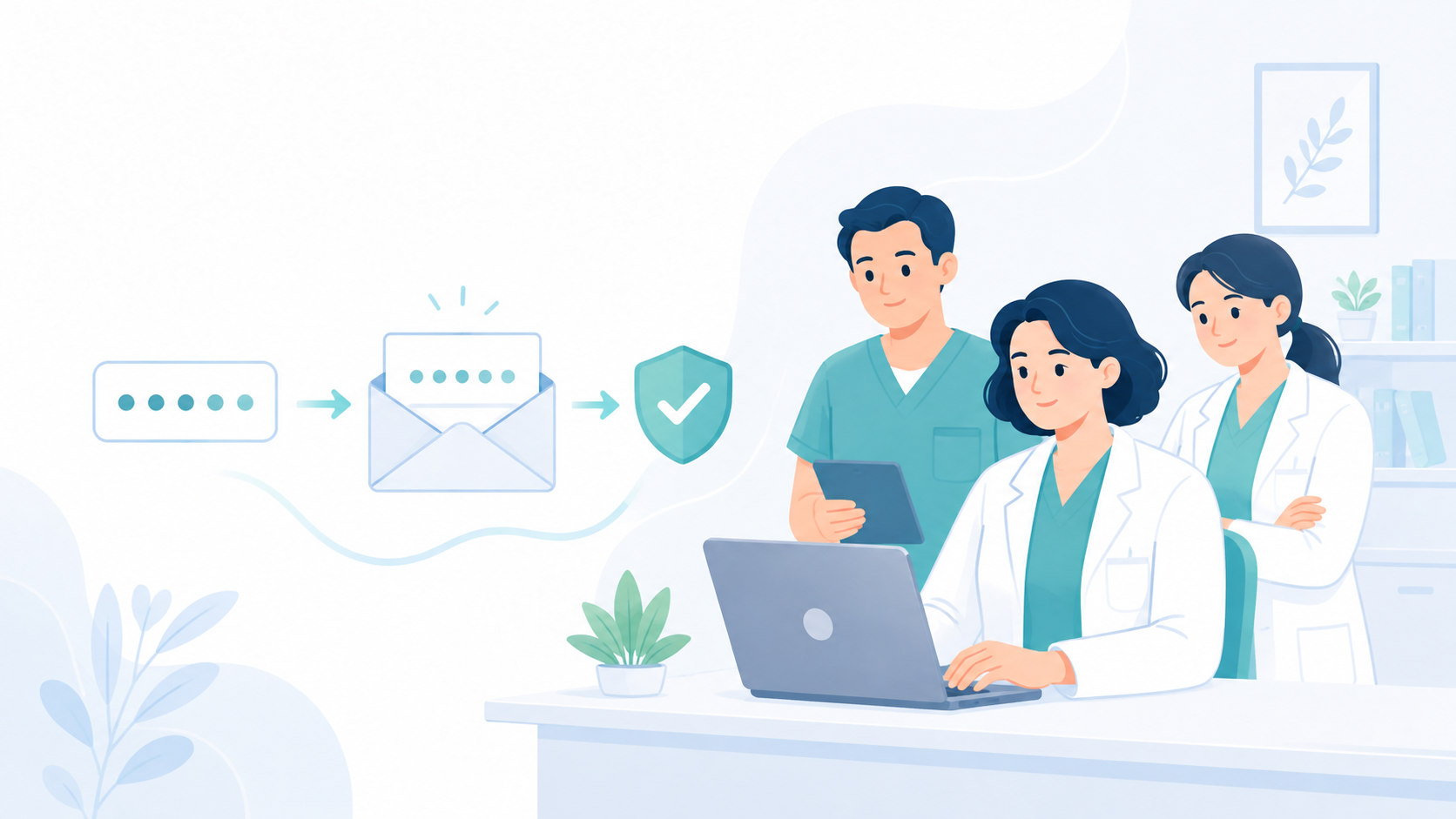
Pediatric information is sensitive and must be handled with clear controls. Itaca follows the applicable HIPAA requirements for its operation and works with cloud providers under BAA agreements. The platform encrypts data in transit and at rest.
Clinical data belongs to the user and their organization. Itaca does not use patient clinical data to train models, does not sell it, and does not provide it to third parties for commercial purposes. Administrators have visibility into usage, access, and team activity.
You can see the full framework in Security and privacy of clinical notes with AI.
Checklist for evaluating AI in pediatrics
Before adopting an AI tool for pediatric documentation, review whether it truly aids the clinical workflow:
- Do you prepare draft revisions instead of automatic final notes?
- Does it allow distinguishing between referred, observed, and evaluated information?
- Do you handle missing data as pending instead of making it up?
- Do you allow the use of a pediatric template or a clinic's own format?
- Do you maintain revision, approval, and signature traceability?
- Does it protect clinical data with encryption, access controls, and administrative visibility?
- Does it clarify that the professional retains clinical responsibility?
How does Itaca fit into a pediatric consultation?
Itaca can help prepare clinical drafts from ambient audio, video calls, clinical documents, quick notes, templates, and documentation rules. In pediatrics, this allows for the preservation of caregiver context, relevant history, findings, plan, and follow-up within a structure that the professional reviews before approving.
If you already use a proprietary pediatric format, you can upload an example of the note or form your clinic currently uses. Itaca can convert it into a reusable template without the team having to write prompts or publish their internal logic.
You can also explore the library of clinical note templates to see other types of care.
Frequently Asked Questions about AI in Pediatrics
Does AI replace the pediatrician's judgment?
No. Itaca prepares a revisable draft. The pediatrician reviews, corrects, approves, and signs when the note reflects the actual care provided.
A pediatric note can organize information such as: * **Patient Demographics:** Name, date of birth, age, sex, guardian information. * **Chief Complaint:** The primary reason for the visit, stated in the patient's or guardian's own words. * **History of Present Illness (HPI):** Detailed description of the current problem, including onset, location, duration, characteristics, aggravating/alleviating factors, radiation, timing, and severity (often using the OLDCARTS mnemonic). * **Past Medical History (PMH):** Previous illnesses, surgeries, hospitalizations, chronic conditions, allergies, medications. * **Family History (FH):** Significant medical conditions in immediate family members (parents, siblings, grandparents). * **Social History (SH):** Living situation, school/daycare, diet, sleep, activity level, exposures (e.g., smoke, pets), developmental milestones. * **Review of Systems (ROS):** A systematic questioning about various body systems to uncover any other symptoms the patient or guardian may not have mentioned. * **Physical Examination:** Findings from head-to-toe assessment, including vital signs, general appearance, and specific system exams. * **Assessment and Diagnosis:** The clinician's evaluation of the patient's condition, including differential diagnoses and the likely diagnosis. * **Plan:** The proposed course of action, including further tests, treatments, medications, referrals, patient/guardian education, and follow-up recommendations.
Can you organize reason for consultation, caregiver information, relevant history, allergies, medications, immunizations, growth or development when applicable, findings, assessment, plan, indications, and follow-up. The public structure here is illustrative and does not expose Itaca's internal templates.
Does Itaca use pediatric data to train models?
No. Clinical data belongs to the user and their organization. Itaca does not use patient clinical data for model training, nor does it sell or provide it to third parties for commercial purposes.
Can the note be adapted to my clinic's format?
Yes. You can upload an example of the pediatric form or note that the clinic already uses, and Itaca can convert it into a reusable template for future care, without the team having to write prompts.
What should the professional review before saving or signing?
You must confirm that the note corresponds to the patient and the current encounter, that it does not add unavailable data, that it separates what is reported from what is observed, that the plan is correct, and that the pending items are clear.


Leave a Reply