




An interface in Spanish makes it easier to start using a tool. It does not demonstrate, by itself, how a medical conversation is processed, how a denial is preserved, or how an actual indication is distinguished from a previous one. To evaluate medical AI in Spanish, it is worth looking beyond the language of the buttons.
The point is not to require a different tool for every accent. It is about ensuring that the flow works with the language that the professional actually uses, in the environment where they work. Language adaptation should be seen in concrete tasks, not just in a promise of multilingual coverage.
There are several layers of language
Distinguish interface, input and output. The interface can be translated while the input is limited to text; another tool can accept audio but produce a note with terms that are not natural for its practice. Each layer requires a different verification.
Also include the recipient. A note for another professional and a summary for the patient can be in Spanish and require different records. The goal is not to simplify everything: it is to use the appropriate degree of precision and explanation for each document.
Denial and correction deserve their own test.
A fictitious exercise can include: “At first he mentioned that he was taking the medication; then he clarified that he stopped taking it last month.” Observe whether the result retains the correct spelling or presents the two versions as simultaneous. You do not need real data to perform this check.
Another example: “It does not mention the symptom currently; it was presented in a previous consultation.” The test seeks to distinguish between the present and the past; it does not assess a diagnosis. These are small differences in the conversation and large ones in the meaning of the recording.
The local vocabulary matters, but it should not be caricatured.
Use the usual terms of your query and check how they appear in the document. “Medical history”, “record”, “order” and “request” may appear in different flows depending on the location. The important thing is that the output is understandable and appropriate, not that it accumulates localisms.
Check for abbreviations and names that might be confused. When the original material is ambiguous, a clear formulation of the doubt is more useful than an invented expansion. Also check dates, units, and decimal separators with fictitious examples, without assuming that a correct translation guarantees their preservation.
Do not generalize from one result to another language
A medical benchmark provides evidence about the tasks and conditions it included. If it does not describe an evaluation in Spanish or in conversations like yours, it does not answer that question. This does not prove a malfunction: it means that additional evidence is needed for that application.
The WHO guide on multimodal models in health It places assessment and governance within the context of responsible use. For an individual decision, a readily available translation is a starting point, not a complete assessment of the professional workflow.
Try out normal conditions, not just perfect audio
If you are evaluating documentation by voice, include natural pacing, clarification, and another person’s intervention. Avoid adding identifiable data in initial tests. Record whether the tool distinguishes who is providing the information and whether it allows for easy correction of the result.
Do not confuse demanding testing with an search for unlikely errors. Use frequent situations in your work. If an encounter with multiple voices requires another procedure, it is better to discover it beforehand and define when that flow is appropriate.
Complete the evaluation in the document that you actually use
Check whether the text needs mental translation or repeated editing to sound natural. A tool can understand the input and still produce sentences that are out of context. That friction also matters when deciding whether to facilitate the work.
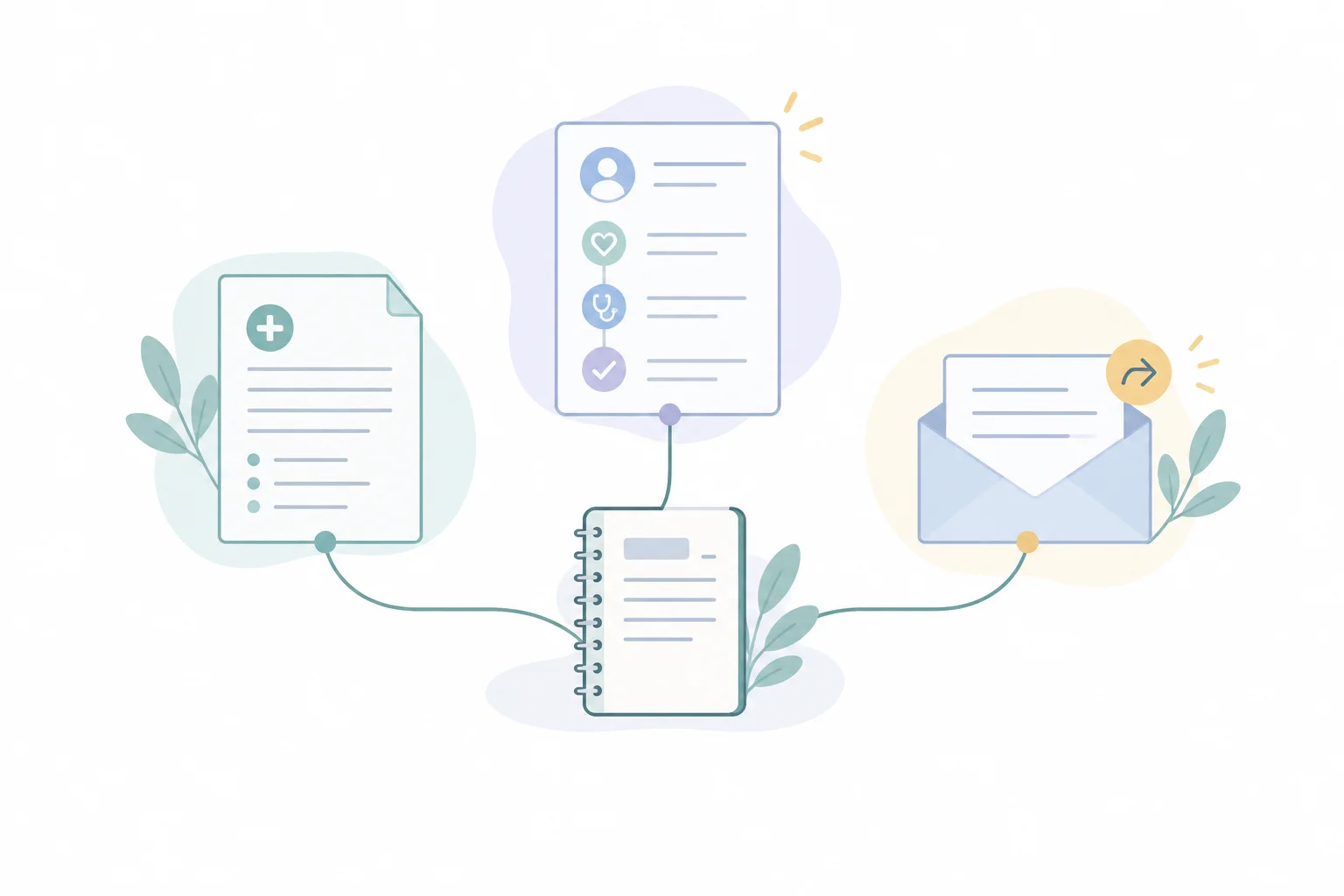
You Itaca can explore the clinical notes with AI and the flow of documents for the patient in their language. Evaluate each output separately. The fact that a function is available does not mean that all modalities, languages, and contexts have the same behavior.


Leave a Reply